
.png)
The Short Answer: A high-performing blog post does more than fill a content calendar. It attracts the right reader through search, answers a real pain point, builds trust, and gives that reader a clear next step.
If you are learning how to write a good blog post, start with one overriding question: Why would someone spend time reading this? Your blog content should provide useful answers, practical additional information, or a new perspective that helps your target audience make progress. Google’s guidance also prioritizes helpful, reliable, people-first content that serves readers instead of content created only to influence search results.
At 20North, we build website content around search intent, business goals, and conversion paths. The result is an effective blog post that can improve search traffic while moving prospects toward a consultation, resource download, email signup, or sale.
1. Start With a Specific Topic and Goal
Strong content creation begins before the writing process. Pick a particular topic your ideal reader is actively trying to understand, then define the main point of the post.
A blog about “marketing tips” is broad. A blog post about “how to write a good blog post that drives conversions” gives the content marketer a defined problem to solve. This focus makes keyword research, outlining, and calls to action much easier.
Before writing a new blog post, identify:
- The target audience and their stage in the buying process
- The pain point or question they need answered
- The primary keyword and supporting terms
- The one action you want readers to take next
- The service, product, case study, or helpful content that supports that action
A growing business may search Google for advice on writi $ng blog content. A useful post should help them improve their writing style, but it can also introduce the value of professional content creation and SEO services.
2. Create a Click-Worthy Headline
Your headline is often the first thing a potential reader sees in Google search results, social media, email, or a guest post. If it does not communicate a clear benefit, the reader may move on before seeing the rest of your content.
A click-worthy headline should be specific, readable, and aligned with the topic. It should make a promise that the blog post can actually fulfill.
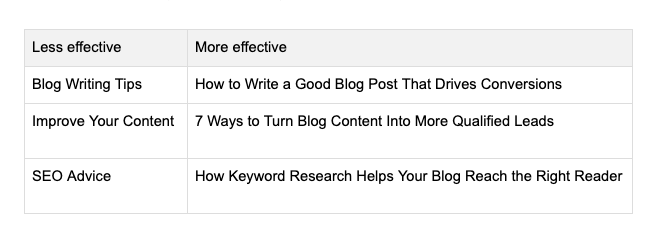
Use the main keyword naturally near the beginning of your headline when it makes sense. Avoid writing a controversial post just for attention if the article cannot support the claim. Trust matters more than a short-lived spike in clicks.
3. Use Keyword Research to Match Search Intent
An effective blog needs more than a good idea. It needs to match what people expect when they search. That is where keyword research supports the writing process.
Look at Google search results for your target topic. Review the questions, related searches, article formats, and language used by pages already ranking. This work helps you understand if readers want a how-to guide, list of different ways to solve a problem, comparison, case study, or detailed explanation.
Use your findings to guide the structure of your post:
- Add the main keyword in the title, introduction, headings, and naturally throughout the content
- Cover closely related terms without forcing every phrase into a sentence
- Answer the main question early, then support it with examples and additional information
- Use descriptive title tags and meta descriptions so search engines and readers understand the page
Search engine optimization should support the reader’s experience, not interrupt it. Google specifically recommends content that has a clear audience, demonstrates experience or expertise, and leaves the reader feeling they learned enough to achieve their goal.
For help connecting keyword research with content planning, explore 20North’s SEO services.
4. Make Every Post Easy to Scan
A reader with a short attention span rarely reads every word in order. They scan headings, review bullet points, look at images, and pause on the details most relevant to them.
Make the blog easier to consume with:
- Short paragraphs that communicate one idea at a time
- Clear H2 and H3 headings that explain the section before a reader begins it
- Bullet points for steps, examples, and lists of different things
- Bold text used sparingly to draw attention to the main point
- Relevant visuals that break up the page and reinforce the content
Visuals have a measurable role in engagement. You do not need to add an image after every short paragraph, but you should use purposeful graphics, screenshots, charts, and infographics to make a blog more useful and visually engaging.
5. Build Trust With Helpful Content
A popular post is not automatically a useful post. Readers convert when they feel the writer understands their situation and offers a credible solution.
Use personal experience, real examples, process details, and clear recommendations when available. A freelance writer can reference lessons from client work. A content marketer can show how a small change in internal links, calls to action, or article structure improved performance. A business can include a case study that demonstrates the outcomes behind its approach. Use external links selectively to cite credible research, official documentation, and trusted non-competitor resources that add context for the reader
Avoid filler and unsupported claims. If you reference a stat, explain why it matters and link to the original source. If you use an affiliate link, disclose the relationship clearly so the reader understands the context.
The goal is not to create a 9-minute blog post just to hit a time-on-page target. Some topics need shorter posts. Others deserve a deeper guide. Give the reader enough information to act, then remove anything that does not support the topic.
6. Use Internal Links to Guide the Next Step
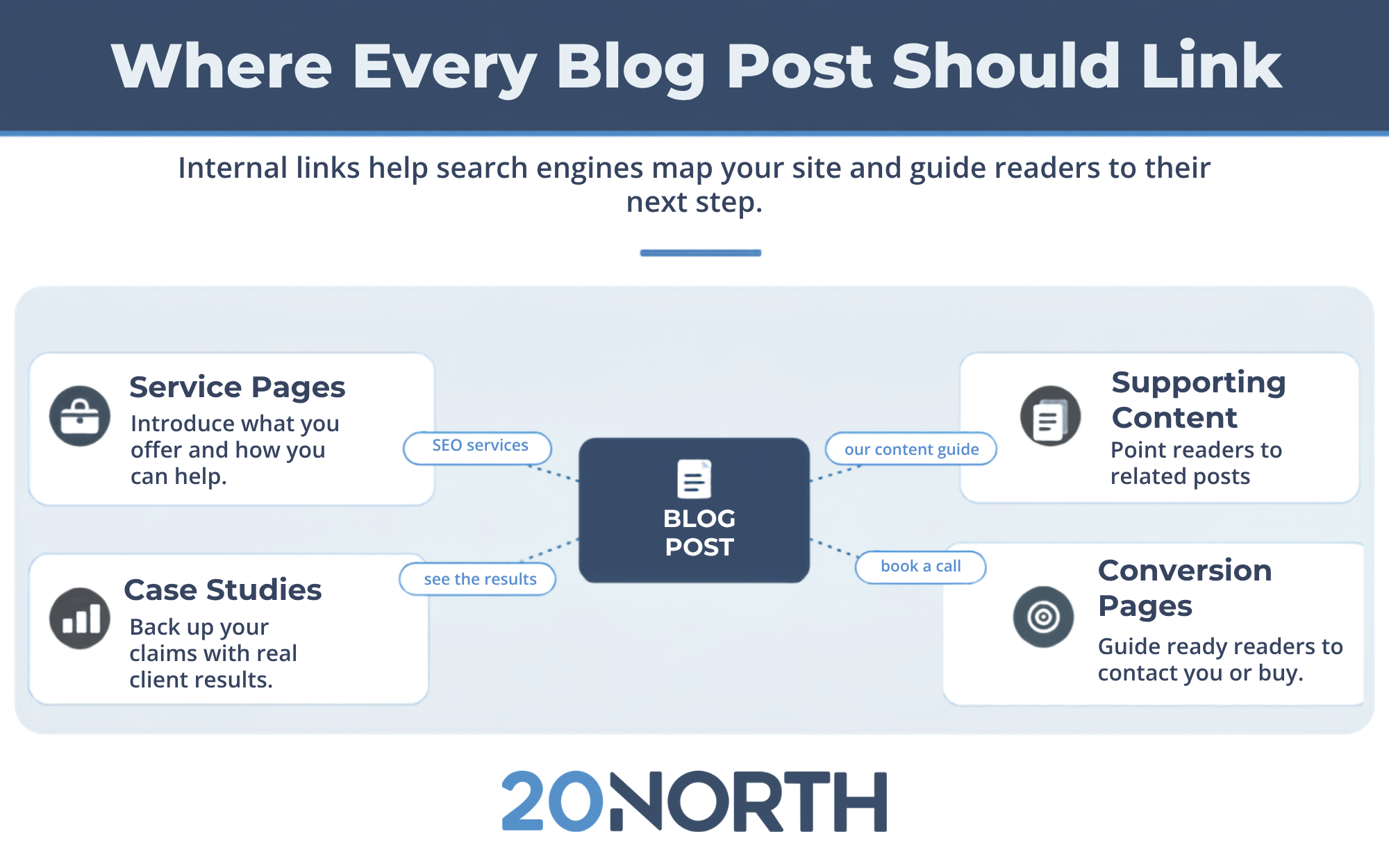
Internal links help search engines understand the relationship between pages on your website. More importantly, they help readers find the next piece of content that matches their needs.
Every blog post should link naturally to relevant service pages, supporting blog content, case studies, and conversion pages. Use descriptive anchor text instead of generic phrases like “click here.”
For example, this post can direct readers to:
- Search engine optimization services for stronger organic visibility
- Paid media services to bring qualified traffic to conversion-focused landing pages
- Email marketing services to nurture blog readers after they subscribe
- Web development services for pages built to support user experience and lead generation
- Conversion rate optimization services to improve the path from traffic to action
- The importance of a long-term content strategy for a broader view of sustained content performance
- How to reap the benefits of local SEO for location-focused search traffic
7. Add a Clear, Relevant CTA
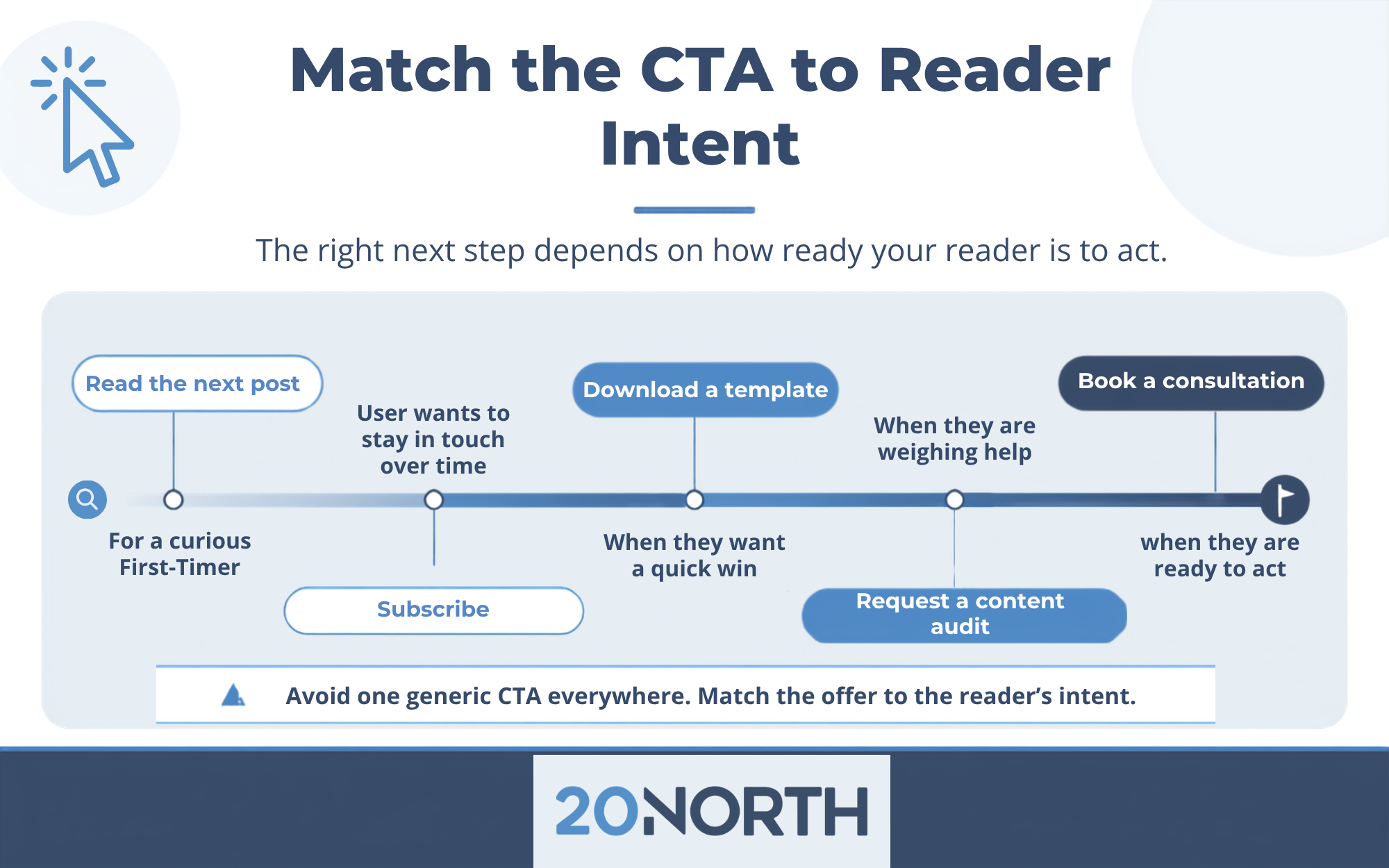
A blog post can earn search traffic and still fail to generate leads if it does not tell the reader what to do next. Your CTA should connect directly to the topic and the reader’s likely need.
For a first blog or an educational post, a low-commitment offer may work best: subscribe to a newsletter, read the next blog post, download a template, or request a content audit. For a reader already researching agency support, a direct consultation CTA may be the right fit.
Keep your CTA focused:
- “Get a free SEO audit”
- “Talk with our content marketing team”
- “Improve your website content”
- “See how CRO can turn more visitors into leads”
Avoid placing one generic CTA everywhere. Match the offer to the topic, target audience, and reader intent.
Turn Better Blog Content Into More Leads
Learning how to write a good blog post is about connecting useful information with a clear business objective. Start with keyword research, write for a specific reader, use short paragraphs and visuals, add internal links, and close with a relevant CTA.
20North helps growing businesses create blog content that earns visibility in search results and supports real conversion goals. Our team combines SEO, paid advertising, email marketing, web development, and conversion rate optimization to help your marketing work together. Contact 20North Today to turn readers into customers.
.png)
.png)
.png)