
.png)
The Short Answer: Search engine optimization (SEO) and search engine marketing (SEM) both help businesses improve online visibility, attract website traffic, and connect with potential customers. The main difference is that SEO focuses on earning organic traffic over time, while SEM typically refers to paid search advertising that can deliver immediate visibility.
For growing businesses, SEO vs SEM is not always an either-or decision. A strong digital marketing strategy often uses both channels to reach the right target audience at different points in the buying journey.
What Is SEO?
Search engine optimization, or SEO, is the process of improving a website so search engines can better understand, crawl, and rank its pages in organic search results. Unlike a Google ad, an organic result does not require a payment every time someone clicks.
SEO involves improving the content, structure, technical performance, and authority of your website around relevant keywords. Google recommends creating helpful, people-first content, using descriptive title tags, organizing pages clearly, and making links accessible for search engine discovery.
An SEO strategy may include:
- Keyword research to identify terms your audience uses when searching
- On-page optimization for title tags, headings, metadata, internal links, and target keyword placement
- Content creation that answers questions customers are asking
- Technical SEO improvements that help search engine algorithms access and interpret your pages
- Local SEO work that strengthens visibility for location-based searches
- Link-building and authority development that support organic ranking growth
SEO is built for sustained visibility. A page that earns strong organic search placement can continue attracting traffic after publication.
What Is SEM?
Search engine marketing, or SEM, is a form of search marketing that places paid ads in search engine results. In most current marketing conversations, SEM refers to pay-per-click search advertising through platforms such as Google Ads and Bing Ads. An SEM campaign gives brands a chance to appear when users search for relevant keywords connected to their services, products, or offers.
A typical SEM strategy includes:
- Keyword research and search intent analysis
- Campaign structure and bidding strategy
- Google AdWords, now called Google Ads, campaign management
- Search ads and responsive ad copy
- Audience, device, location, and schedule targeting
- Landing page optimization
- Conversion tracking and ongoing budget management
SEM can produce immediate results because advertisers can launch search ads quickly. That instant visibility can be valuable for new offers, seasonal promotions, competitive categories, and businesses that need leads while their SEO efforts gain traction.
20North’s paid media services help businesses plan, build, test, and improve paid search campaigns around business goals rather than clicks alone.
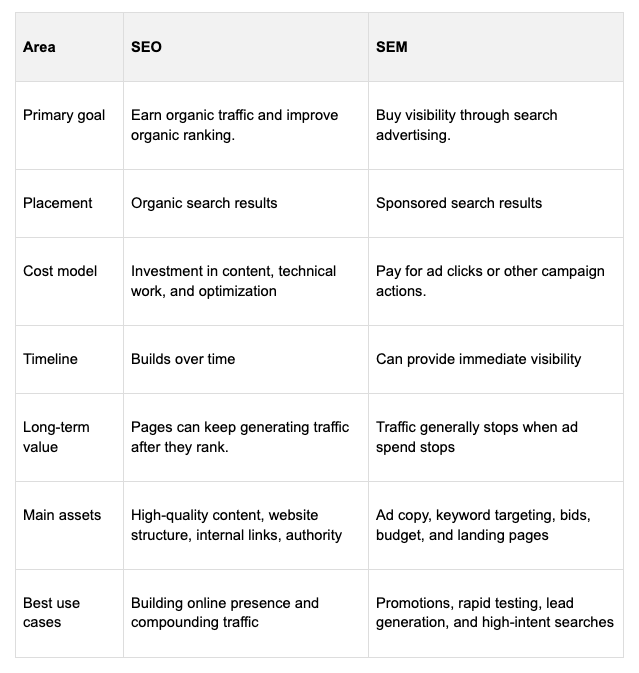
The Key Differences Between SEO and SEM
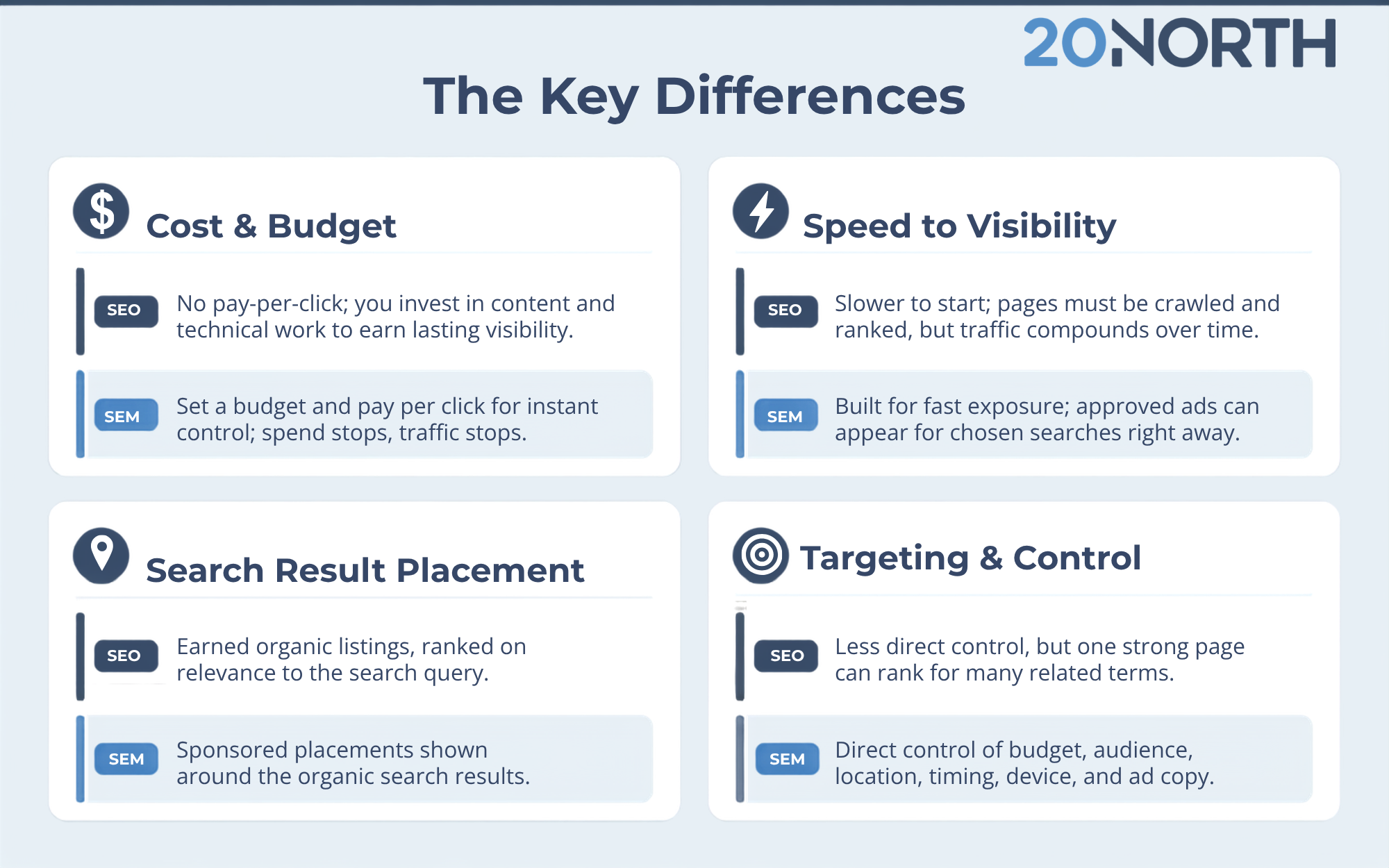
Cost and Marketing Budget
SEO requires an investment in strategy, content, technical improvements, and measurement. You are not charged for each click from an organic search result, but it takes consistent work to earn and protect visibility.
SEM uses a defined marketing budget. Advertisers choose how much they are willing to spend, bid on relevant keywords, and pay when users interact with their search ads. This gives businesses more immediate control over traffic volume, but results rely on continued campaign funding.
Speed to Visibility
SEO takes longer because search engines must discover, assess, and rank your pages against existing competitors. The payoff is that organic traffic can compound as your website gains more useful content, stronger internal links, and better authority.
SEM is built for fast exposure. Once campaigns, search ads, and landing pages are approved, your business can begin appearing for selected searches. Paid media is useful for when immediate results matter.
Search Result Placement
Paid search advertising typically appears in sponsored placements around organic results. Organic search results are earned through search engine optimization and relevance to the query.
Both occupy valuable space in search engine results. A brand that appears in paid and organic search may gain more visibility for high-value terms, especially when the message and landing page experience are aligned.
Targeting and Control
SEO offers less immediate control over rankings, but it can support a broader set of searches through useful pages, blog content, service pages, and resources. A single well-optimized page may rank for many related terms, not just one phrase.
An SEM campaign provides direct controls around budget, target audience, geography, timing, device, search terms, and ad copy. You can test a new target keyword, compare offers, and adjust quickly based on performance.
When Should You Use SEO?
SEO is a strong fit when your business wants to build a durable online presence and create a dependable source of organic traffic. SEO is necessary to rank a website effectively in search results. It works particularly well for companies that have expertise to share, recurring customer questions, service pages to improve, or local markets to reach.
Invest in SEO when you want to:
- Increase website traffic without relying entirely on ad spend
- Improve visibility for informational and commercial search terms
- Build high-quality content that helps potential customers before they are ready to buy
- Strengthen user experience through better navigation, page speed, and page structure
- Support long-term brand awareness in competitive search results
- Make your website easier for search engines and people to use
SEO also supports other marketing channels. Strong landing pages, clear messaging, and helpful content can improve the performance of email marketing, paid campaigns, and social media content.
When Should You Use SEM?
SEM is a smart choice when speed, testing, or precise campaign control matters. Paid search can put your offer in front of people who are already searching for a solution, which makes it useful for lead generation and direct-response marketing.
Use SEM when you need to:
- Drive immediate visibility for a new service, event, promotion, or product
- Reach high-intent searchers with targeted Google Ads
- Test which keywords, messages, and landing pages produce conversions
- Generate qualified leads while organic ranking efforts develop
- Expand into a new geographic market
- Protect visibility for branded searches and key commercial terms
A strong SEM campaign should not end at the click. The landing page needs a clear message, fast load time, a relevant call to action, and a path that makes it easy for visitors to convert. Conversion rate optimization helps turn paid and organic traffic into more meaningful business outcomes, and on-page optimization keeps the page working long after the ad budget stops.
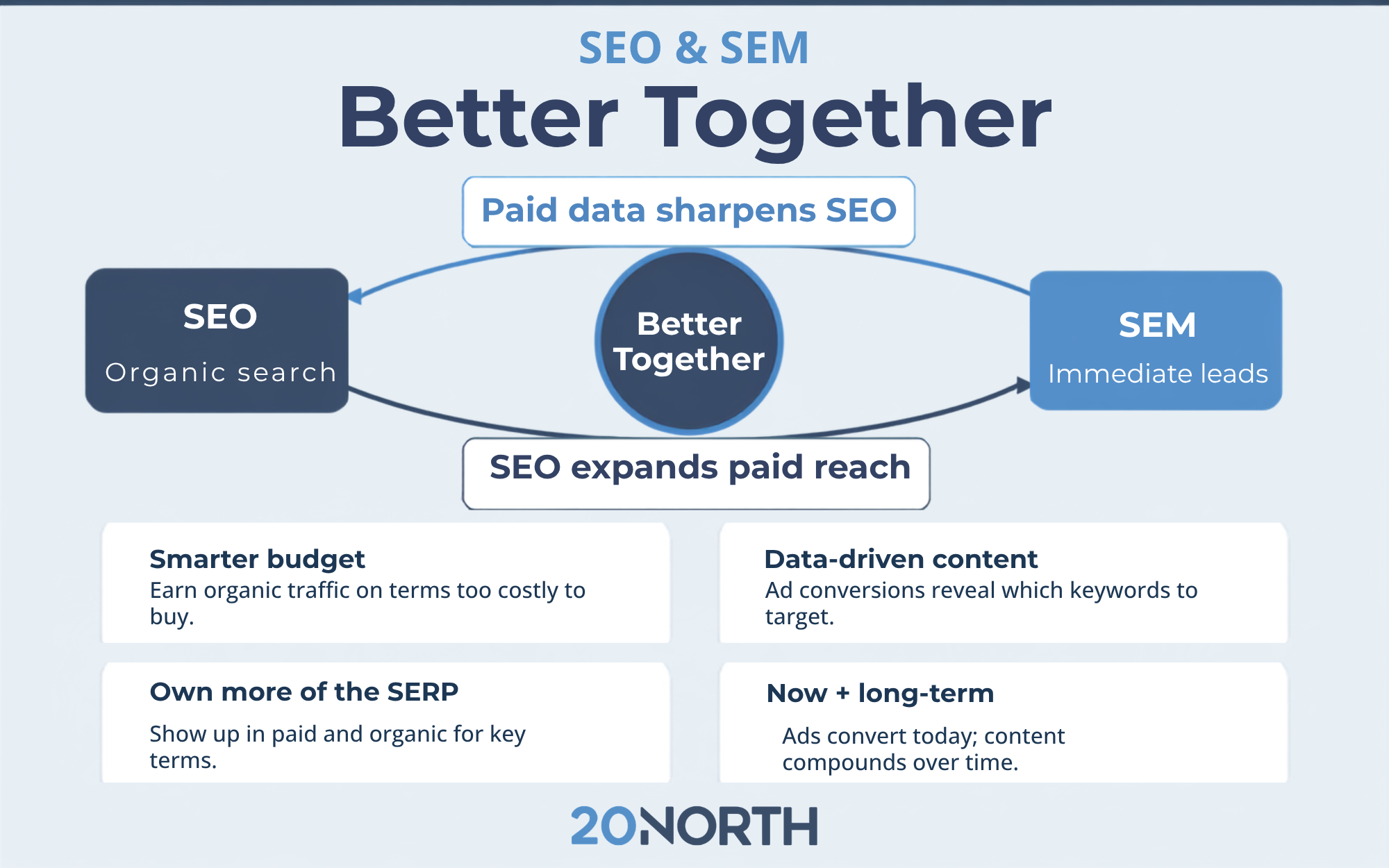
Why SEO and SEM Work Better Together
SEO and SEM use different methods, but both are designed to help your business show up when your audience is searching. Using them together creates a more informed marketing strategy.
Paid search data can reveal which relevant keywords drive calls, form submissions, purchases, and qualified leads. That insight can shape SEO content creation and help prioritize service pages, blog topics, and title tags. At the same time, SEO can build organic traffic around topics that may be expensive to target through search advertising.
Build Your Search Marketing Strategy with 20North
The best choice in the SEO vs. SEM conversation depends on your goals, market, timeline, website, and marketing budget. Some businesses need instant visibility through paid media, while others need a stronger organic foundation. Overall, most growing companies benefit the most by using a coordinated plan that includes both.
20North is a full-service digital marketing agency in Atlanta offering SEO/AEO services, paid advertising, web development, and email marketing. Our team of experts builds practical strategies that improve online visibility, attract the right audience, and turn traffic into measurable growth.
Get in touch with 20North today to discuss an SEO, SEM, or integrated search marketing strategy for your business.
.png)
.png)
.png)