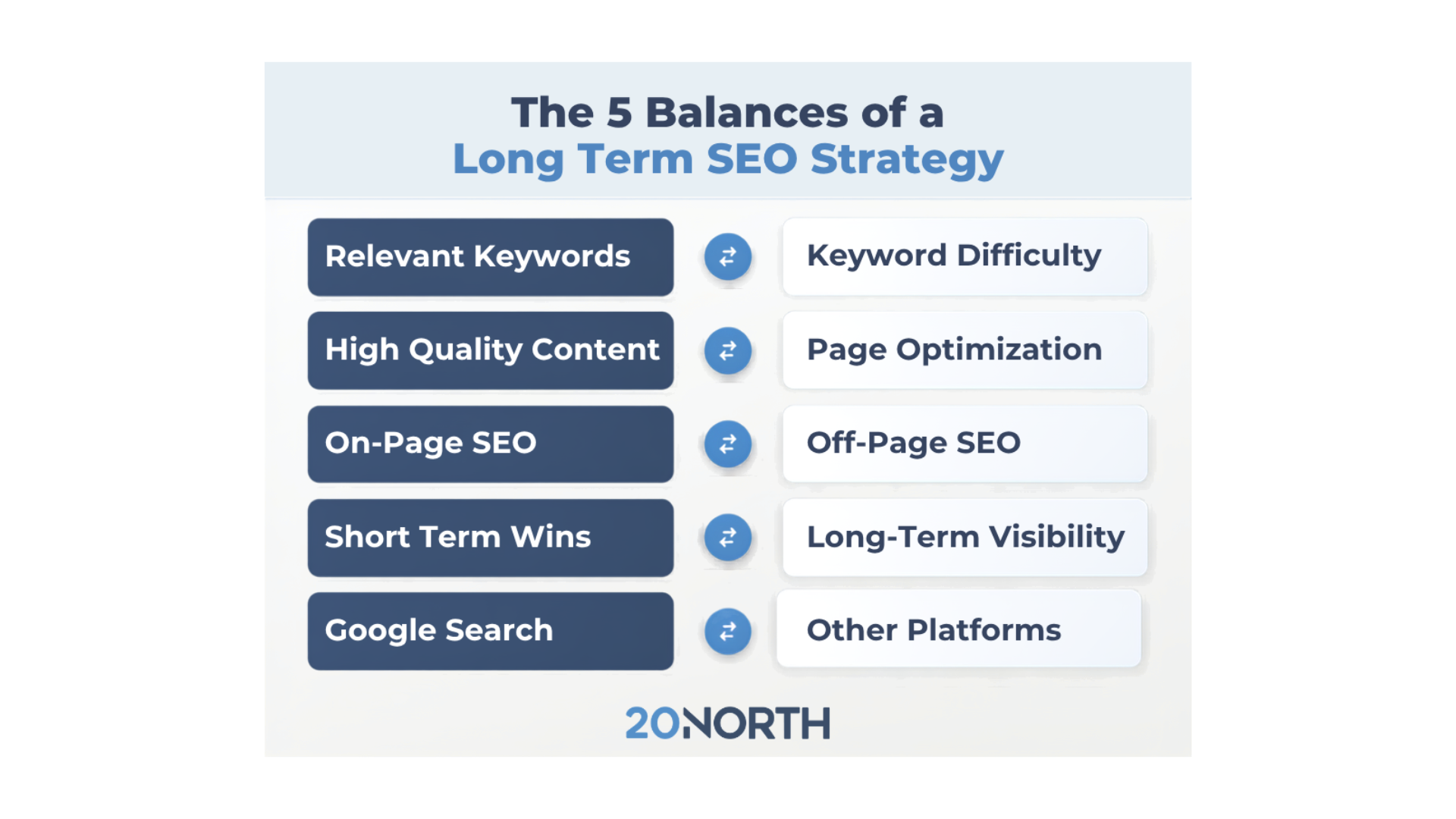
The Short Answer: A long-term SEO strategy balances five things at once. Keyword relevance against competition, content quality against on-page optimization, technical work against content creation, quick wins against long-term visibility, and Google against the other search platforms. Give every piece steady attention, and your search rankings will hold up over time.
Search engine optimization is a balancing act. SEO works best when every piece works together. A site loaded with target keywords but no useful content will not hold a search ranking. A well-written blog post with technical issues may never get indexed properly. SEO works when the pieces support each other and are done correctly.
The Building Blocks of a Successful SEO Strategy
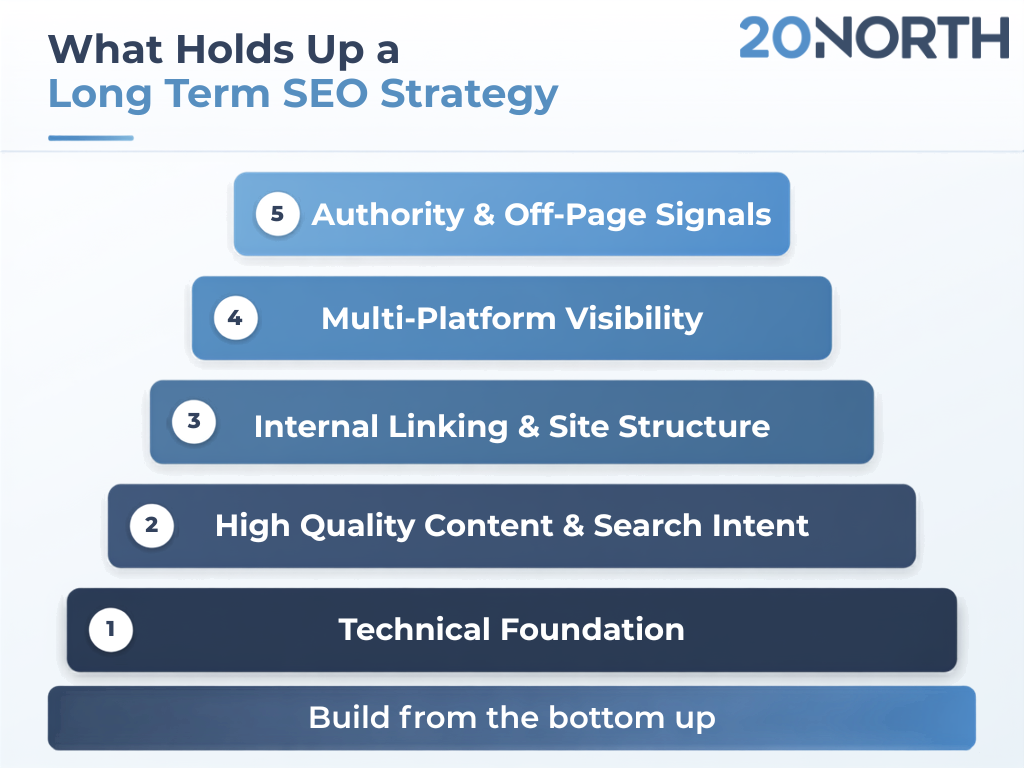
A successful SEO strategy depends on multiple elements working together. Site structure, content, optimization, and technical health all play an important role in improving search visibility and driving long-term results.
It starts with a strong site structure and metadata that helps search engines understand each page. This includes title tags and meta descriptions built around relevant keywords with proven search volume. Next comes on-page optimization, where existing pages can be improved by restructuring content, expanding key topics, and adding trustworthy sources to better match search intent and demonstrate expertise.
High-quality content is another essential part of SEO because it gives search engines more context about your business while providing value to potential customers. Blogs, guides, and educational resources help answer questions throughout the buyer journey, target additional search opportunities, and build topical authority over time. When supported by a clear internal linking strategy, this content helps connect related pages and strengthens the overall website.
Keyword Research: Targeting the Right Opportunities
Keyword research considers several factors. Search volume shows how often users search for a specific term, while keyword difficulty estimates how challenging it may be to rank based on competing pages and authority signals. High-volume keywords can bring significant traffic, but they are often more competitive and may require a longer investment to rank. Lower-volume long-tail keyword can attract more qualified visitors because they often align with more specific searches and stronger buying intent.
Search intent is just as important as search volume. A keyword only creates value when it matches what users are looking for and supports a business goal. After target keywords are selected, they can be mapped to the appropriate pages, incorporated into content and metadata, and monitored as search engines process the updates.
Content Quality and SEO Optimization
Improving existing content is often one of the most effective ways to increase organic visibility. Pages that already rank for relevant keywords, especially those appearing near the first page of search results, often have opportunities to gain additional traffic with targeted improvements. Updates may include restructuring content to better match search intent, expanding sections that need more detail, improving title tags and meta descriptions, adding internal links, and citing trustworthy sources to strengthen credibility.
The goal is to create content that works for both users and search engines. Under-optimized pages may not clearly communicate their topic or relevance, while over-optimized content can feel unnatural and difficult to read. The strongest SEO content prioritizes helpful information first, then applies optimization strategies that improve visibility without sacrificing the user experience.
On-Page SEO vs. Off-Page SEO
On-page SEO focuses on the elements you can directly improve on your website, including content, site structure, metadata, internal linking, and technical health. Off-page SEO refers to signals that come from outside your website, such as backlinks, brand mentions, and online reputation.
Both areas can influence search visibility, but strong SEO starts with a website that provides value to users and search engines. Improving content quality, creating a clear site structure, strengthening internal links, and resolving technical issues gives search engines a better understanding of your website and its expertise.
A balanced SEO strategy addresses the factors a business can control while continuing to build authority over time through quality content and a strong digital presence.
Internal Linking vs. New Content
Internal linking passes authority between web pages and shows search engines how your content fits together. Anchor text should describe the destination in plain language, so a link reading "SEO services" tells Google more information. Every new blog post should link to the page it supports. Before you brief another round of content creation, map what already exists and connect it.
SEO Requires Ongoing Optimization and Growth
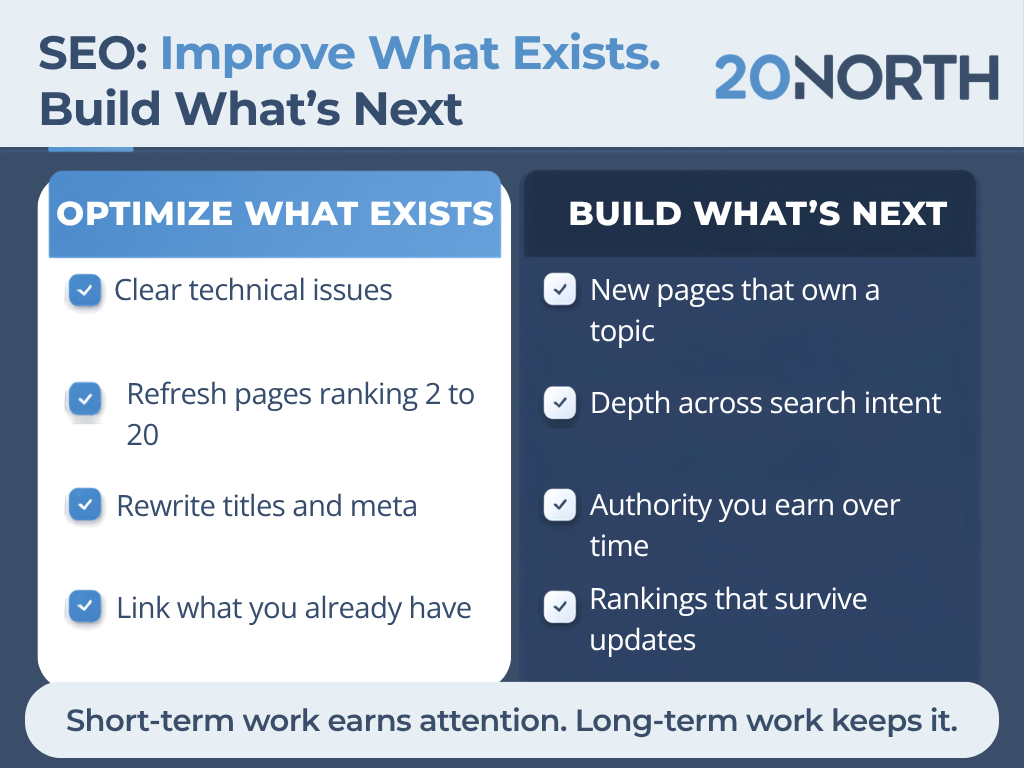
A strong SEO strategy depends on two ongoing efforts: improving the content and pages that already exist, while also creating new opportunities for future growth. These are not separate phases. Both are essential parts of building and maintaining organic visibility over time.
Optimizing what already exists helps strengthen the visibility you have today. Clearing technical issues makes it easier for search engines to crawl and understand your website. Refreshing pages that already rank, especially those close to page one, can improve their performance with targeted updates. Rewriting title tags and meta descriptions, improving page structure, and strengthening internal linking all help search engines better understand your content while improving the user experience.
At the same time, SEO growth also depends on building what comes next. New pages create opportunities to target additional keywords, cover core topics more completely, and support users at different stages of search intent. Helpful blogs, service pages, and educational resources expand your reach, strengthen topical authority, and give your website more ways to earn visibility in search.
The most effective SEO strategies do both. A website that only focuses on existing pages can eventually run out of growth opportunities, while a website that only creates new content may miss opportunities to improve pages that already have traction. Sustainable SEO comes from continuously improving current visibility while expanding future opportunities.
Google Versus Other Search Platforms
SEO extends past Google. YouTube ranks video on tags, descriptions, and watch time. Amazon ranks products on titles, reviews, and sales velocity. AI answer engines pull from sources that are structured and clearly written. However, Google remains the primary focus for most SEO strategies because it continues to be the largest source of organic search traffic
You can learn more from our blog on AI vs Google Search and in our guide to Google AI Mode. Schema markup also helps across all of them, and answer engine optimization techniques give you a starting point.
How SEO Works Alongside Other Marketing Channels
SEO is one part of a broader digital marketing strategy. While each channel serves a different purpose, combining SEO with other marketing efforts can create a stronger and more consistent online presence.
Paid media delivers visibility the day a campaign turns on and stops delivering when the budget does. That makes it useful for testing offers, covering seasonal demand, and reaching audiences before your organic rankings exist.
Email marketing works on people who already know you, so it carries almost no acquisition cost and tends to produce the highest return per send.
SEO is slower to start and needs continuous work to hold its position once it is there. This makes it the channel that keeps working between campaigns.
These channels also feed each other. Paid search data shows you which keyword phrase converts before you invest a year in ranking for it. SEO content gives your email program something worth sending. Email engagement and branded search both rise as your online presence grows. Integrating these channels into a unified marketing strategy creates a more consistent customer journey and allows each channel to support the others.
How to Keep Your SEO Strategy in Balance
Balance is a habit rather than a one-time decision. A quarterly review keeps the pieces in proportion.
- Technical health: Check Core Web Vitals, crawl errors, and mobile rendering in Google Search Console.
- Keyword coverage: Confirm your target keywords still match search intent and business goals.
- Content quality: Refresh pages ranking between positions 2 and 20 before writing anything new.
- Internal linking: Connect new web pages to the pillar pages they support.
- Measurement: Track organic traffic, keyword rankings, and conversions in Google Analytics using the SEO KPIs that matter.
Balance Marketing Strategy With 20North
If you want help finding the right balance, 20North can work through it with you. Our SEO services and AI SEO services cover keyword research, content creation, technical work, and reporting under one team.
Start with a free AI SEO audit from 20North. Get in touch today to see where your online presence stands!