
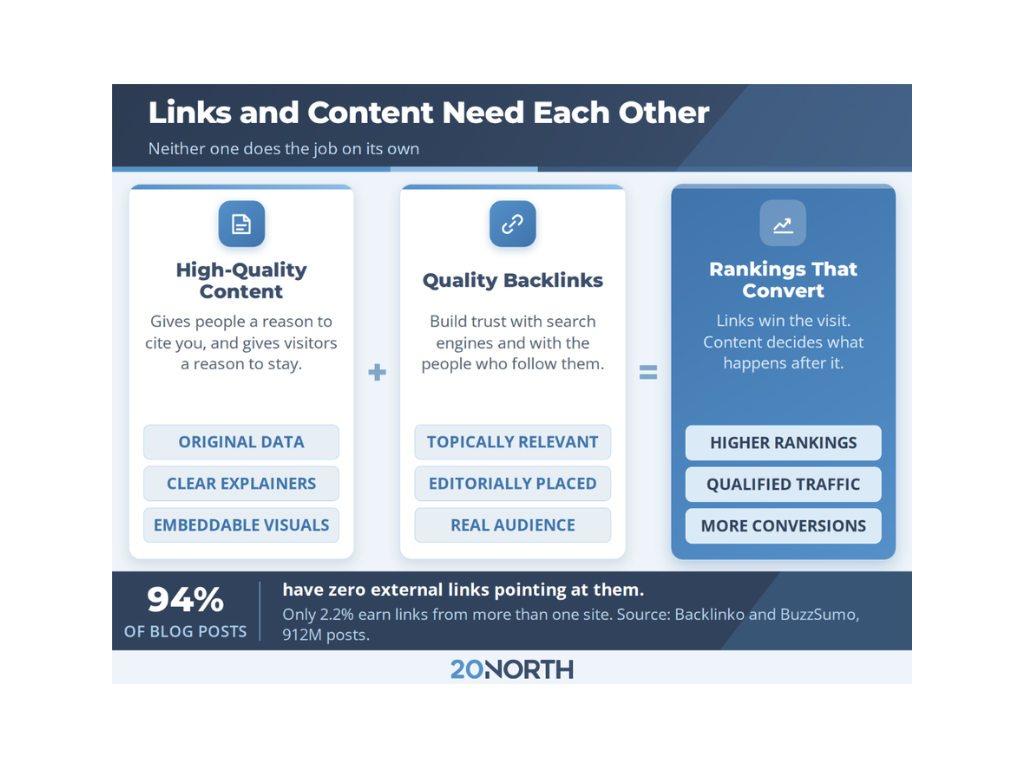
The Short Answer: Backlinks and high-quality content depend on each other. Content nobody wants to cite will not earn links, and links pointing at a weak page waste the visit. Most content earns nothing at all, so the practical work is publishing the formats that actually get cited and asking for the links you have already half-earned. The relationship between backlinking and high-quality content runs deep.
When you combine high-quality, relevant, authoritative content with quality backlinks, you can only help yourself in Google search. The best quality gets natural, organic links from other sites, which is one of the keys to successful content marketing.
For SEO best practices, backlinks are important. They help build trust and authority for search engines and potential customers. When prospects are reading content on a site they trust and they see a link to your organization, it can raise your profile in their mind. If they click through and find poor quality or a disappointing user experience, all the positive attributes generated can disappear in an instant.
Backlinks might help your search ranking position and get you more traffic. It is the quality content that engages readers and converts prospects into customers. Backlinks matter, but so does quality. One will not work without the other.
That does not mean you should write great content and sit back waiting for links to accumulate on their own. A proactive approach to link building helps build your website or blog's reputation.
Most Content Earns No Links At All
Backlinko and BuzzSumo analyzed 912 million blog posts and found that 94% of all blog posts have zero external links. Only 2.2% earn links from more than one website.
Those numbers should change how you plan. Link building is not a matter of publishing and waiting. The default outcome for any given post is silence, so earning even a handful of incoming links puts you ahead of most of the web.
How Much Do Backlinks Actually Matter
Backlinks matter less than the industry implies and more than skeptics claim.
Google's own SEO Starter Guide addresses this directly. PageRank uses links and is one of the fundamental algorithms at Google, but Google states there is much more to Search than links and that PageRank is one of many ranking signals.
Read that as calibration rather than permission to ignore links. Google also says the vast majority of new pages it finds every day are discovered through links, so links still do the work of getting your pages found in the first place. That matters for visibility in search and increasingly for visibility in AI answers too.
Not All Backlinks Are Equal
If you want high-quality traffic, you need links from high-authority websites. A couple of backlinks from high-quality sites will serve you better than hundreds of links from low-quality sites. Search engines treat links from strong referrers as more important, which is what people mean by the informal term link juice.
Relevance carries as much weight as authority. A link from a mid-sized site in your exact industry usually beats a link from a larger site with no topical connection. Quality indicators worth checking are editorial standards, topical fit, a real audience, and how freely the site links out to anyone who asks.
So how can you help create organic backlinks? Here are four backlinking tips to get you started.
1. Create the Right Type of Content
The same study of 912 million posts looked at which formats earn links, and the answer surprises people.
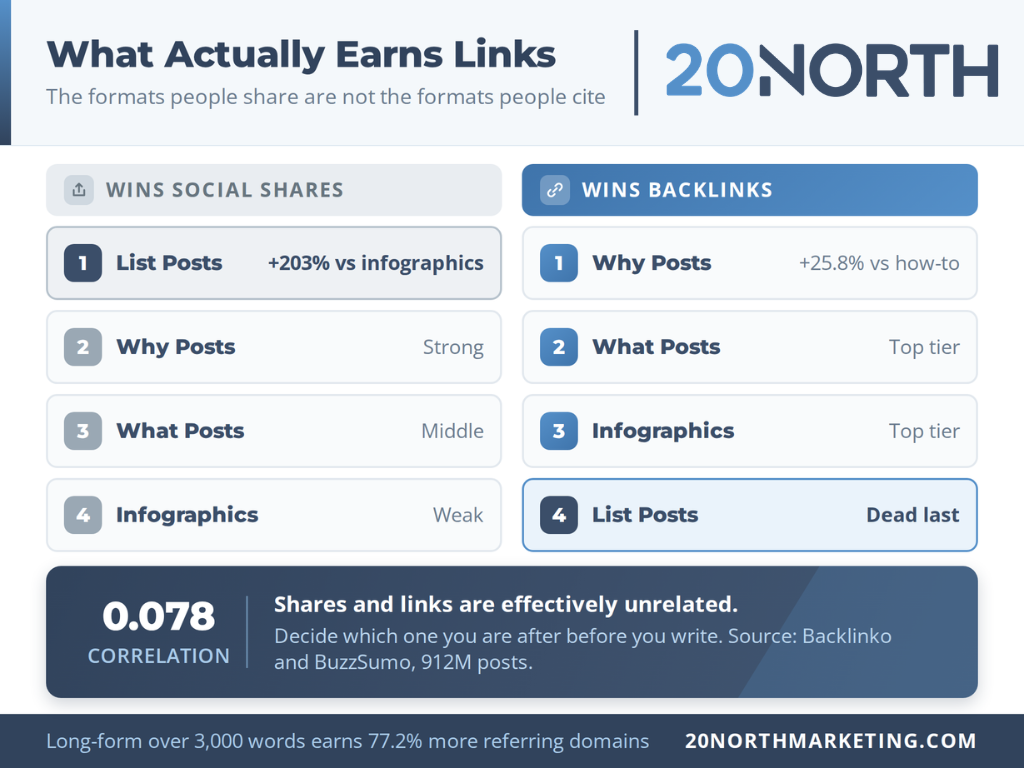
Why posts, what posts, and infographics received 25.8% more referring domain links than how-to posts and videos. List posts, the format most publishers reach for, finished last for backlinks. They generate more social shares than anything else and almost no links.
That gap matters because shares and links do not travel together. The study found virtually no correlation between the two. Content that goes viral is rarely the content that gets cited, so decide which one you are after before you write.
If links are the goal, publish the things people need to reference: original data, explainer posts that define a topic clearly, and visual content that others can embed. Long-form helps too, since content over 3,000 words earned 77.2% more referring domain links than content under 1,000.
2. Add Your Content to Resource Pages
Search for "useful resources" or "list of" alongside your topic, and you will find pages that curate information. Reach out and politely ask to be added.
This works when your page genuinely belongs on the list. It fails and wastes goodwill when you pitch a sales page to a curator collecting educational resources.
3. Look for Broken Links
When links are broken or lead to inactive sites, it makes the publisher look bad. When you find a broken link pointing at content related to yours, contact the site publisher and let them know. Suggest they link to yours instead, and oftentimes you will get a thanks and a link.
Ahrefs has a free broken link checker. Once you find a site worth targeting, run it through to see what has gone stale. We cover the wider toolset in our roundup of the best SEO tools.
4. Look for Mentions Without Links
Have you set up Google Alerts for your brand? It is a free service that tells you when someone references your name or company.
Use it to find places where you have been mentioned without a link. Someone who already wrote about you has done the hard part. Asking nicely often gets you a revision with the link added.
Where the Line Is
The four tactics above are outreach, not manipulation, and that distinction matters more than it used to.
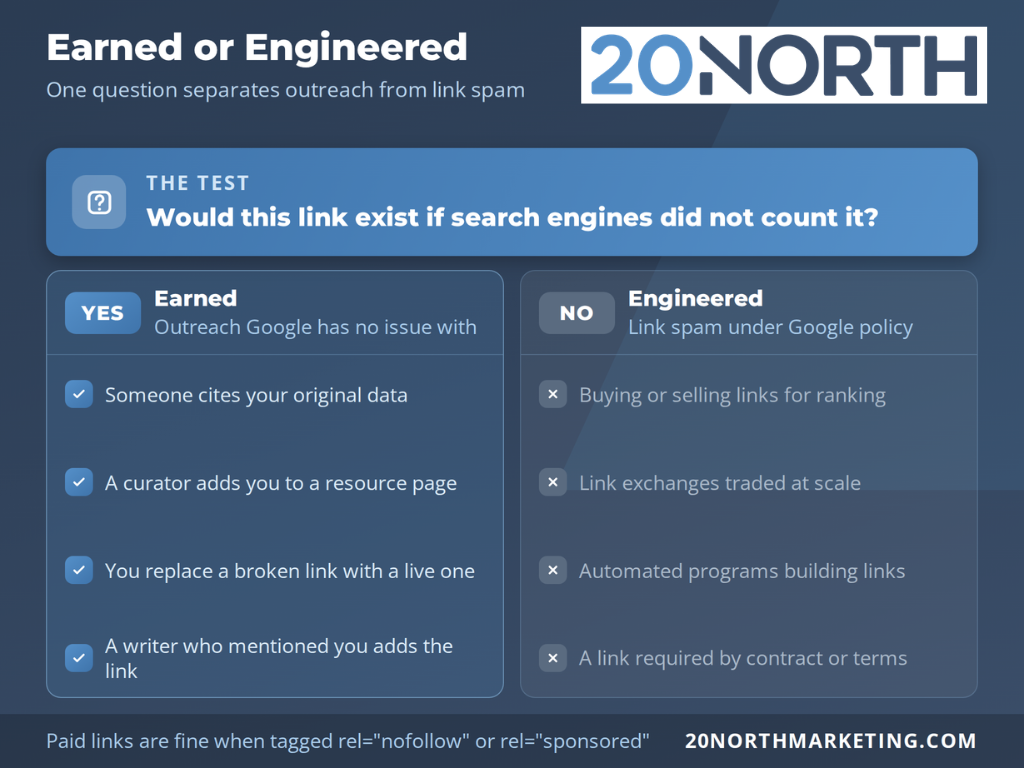
Google defines link spam as creating links to or from a site primarily to manipulate search rankings. Its published examples include buying or selling links for ranking purposes, excessive link exchanges along the lines of "link to me and I will link to you," using automated programs to create links, and requiring a link as part of a contract or terms of service.
Google notes that paid links are a normal part of the web for advertising and sponsorship. They are fine as long as they carry a rel="nofollow" or rel="sponsored" attribute so they do not pass ranking credit.
The test worth applying before any outreach is simple. Would this link exist if search engines did not count it? If the honest answer is no, skip it.
One question we field often is what to do about low-quality links pointing at your site that you never asked for. In most cases, nothing. Google says it ignores the links it does not trust rather than penalizing you for them, so scraper sites and directory spam usually need no action. The disavow tool exists for the rare case where you have a manual action or a history of paid links you are cleaning up.
Do Not Forget Internal Links
Every external link you earn is a negotiation with someone else. Internal links are entirely yours, and most sites underuse them.
Linking related posts to each other helps readers find more of your work and helps Google understand which pages matter. Write the anchor text so it describes the destination, because a link labeled "click here" tells search engines nothing about the page it points to.
One simple framework is to have every new post link out to two or three older ones, and then go back and link at least one older post to the new one. That takes minutes and gives the page a path for both readers and crawlers to reach it.
Measuring What You Earned
Track referring domains rather than raw link counts. One link from each of ten sites is worth far more than ten links from one site, and the raw number flatters profiles built on site-wide footer links.
Search Console shows which sites link to you and which pages attract them, and it is free. Paid platforms add competitor data, so you can see who links to a rival and does not yet link to you.
Check quarterly, watch the trend rather than the weekly noise, and pay attention to which content types earned the links so you can publish more of them. Our guide to the SEO KPIs that matter covers what else belongs on that report.
Build Content Worth Linking To With 20North
Link building starts with something worth citing. Original data, clear explanations, and useful visuals earn links because people need them, and no amount of outreach rescues a page nobody wants to reference.
20North is a full-service digital marketing agency in Atlanta. Our team pairs content creation with search engine optimization, on-page optimization, and technical work so the pages you promote are worth the click when someone arrives. See it in our case studies, including how Roam grew its page-one keyword footprint by 130%.
If you want to learn more about content marketing and improve your brand profile, contact 20North today.
.png)
.png)
.png)