

At a Glance: Google's AI overviews appear when the search engine determines that an ai-generated summary would best serve the user intent behind a search query. These overviews typically show up for informational queries where users seek explanations, comparisons, how-to guidance, or multi-faceted answers. To increase your chances of being cited in an ai overview, your content needs to demonstrate expertise, provide clear and structured answers, and align with the type of questions that trigger this new feature. Understanding what triggers an ai overview seo strategy can help you maintain organic visibility as the search landscape continues to evolve.
The introduction of Google's AI overviews has changed how users interact with search results. This search generative experience pulls information from multiple online sources to create ai-generated answers that appear at the top of Google search results, often before traditional organic results. For content creators and businesses, this shift raises important questions about organic traffic, click-through rates, and how to adapt SEO strategy accordingly. This guide explains what triggers these overviews, how to optimize your content for inclusion, and why working with specialists often produces better results than navigating this new terrain alone.
Understanding Google's AI Overviews
Google's generative AI creates summaries that aim to answer user questions directly within the search results page. Rather than requiring users to click through to websites, these ai-generated overviews synthesize information from multiple sources into a cohesive response.
The overview typically includes citations to the sources used, giving credited websites some visibility even within the ai-generated summary. However, the placement of these overviews at the top of the page has raised concerns about fewer clicks reaching traditional organic search results.
When Do AI Overviews Appear?
AI overviews don't show up for every Google search. The artificial intelligence behind this feature evaluates each search query to determine whether an overview would improve user experience.
Queries most likely to trigger AI overviews include:
- Informational queries seeking explanations or definitions
- How-to questions requiring step-by-step guidance
- Comparison queries evaluating multiple options
- Questions with complex, multi-part answers
- Research-oriented queries where users need synthesized information
Queries less likely to trigger AI overviews include:
- Navigational queries where users want a specific website
- Transactional queries with clear purchase intent
- Simple factual queries answered by a featured snippet
- Local searches with map-based results
- Queries where real-time information is needed
Understanding these patterns helps you target content toward queries where AI overviews appear while maintaining strategy for queries where traditional organic results still dominate.

What Triggers an AI Overview: Key Factors
Google hasn't published a definitive list of ranking factors for AI overview inclusion, but patterns have emerged from analyzing which content gets cited. Several factors appear to influence whether your pages appear in these ai-generated overviews.
Content Quality and Expertise
Google's AI pulls from sources it considers authoritative and trustworthy. Pages that demonstrate genuine expertise on a topic have better chances of inclusion. This means going beyond surface-level content to provide real depth, original insights, and accurate information that adds value.
Content that simply rephrases what already exists online offers little for the AI to reference. Original research, unique perspectives, and thorough explanations stand out as sources worth citing.
Clear, Structured Formatting
The way you structure content affects how easily Google's AI can extract and use information. Well-organized content with clear headings, logical flow, and distinct sections makes it easier for the AI to identify relevant passages.
Formatting best practices for AI overview optimization:
- Use descriptive headings that signal what each section covers
- Break complex topics into digestible subsections
- Include lists and bullet points for scannable information
- Write clear topic sentences that summarize key points
- Use tables for comparative information when appropriate
Direct Answer Alignment
AI overviews aim to answer user questions. Content that directly addresses the questions users ask, rather than dancing around topics, tends to perform better. Think about the specific search query someone might use and provide a clear, direct response within your content.
This doesn't mean writing short, shallow content. It means including concise answers alongside deeper exploration of topics. A well-placed summary paragraph that directly answers the core question, followed by detailed supporting information, serves both users and AI systems well.
Schema Markup Implementation
Schema markup helps search engines understand your content's structure and meaning. While schema alone won't guarantee AI overview inclusion, it provides additional signals about what your content covers and how it's organized.
Relevant schema types for AI optimization include Organization schema, FAQ schema, How-To schema, Article schema, and Review schema. Implementing these correctly gives Google's AI additional context about your content's purpose and structure.
Page Authority and Trust Signals
Pages from websites with established authority tend to appear more frequently in AI overviews. This includes factors like domain authority, backlink profiles, and overall site reputation. Building these trust signals takes time but improves your chances across both traditional organic results and AI-generated summaries.
Optimizing Your Content Strategy for AI Overviews
Adapting your seo strategy for AI overviews requires balancing traditional search engine optimization with new considerations specific to how generative AI evaluates and uses content.
Target the Right Keywords
Long-tail keywords and question-based queries often trigger AI overviews more than short, generic terms. Research what questions your audience asks and create content that thoroughly addresses those queries.
Use Google Search Console to identify queries where your content already appears in search results. Analyze whether AI overviews show for those terms and adjust your content to better match what the AI seems to value.
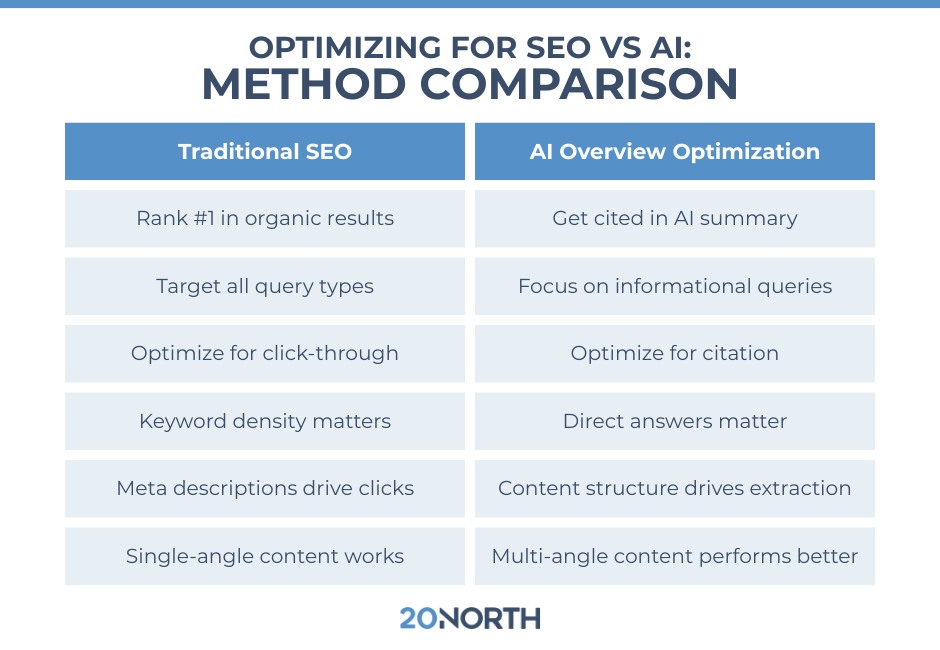
Create Multi-Angle Content
AI overviews often synthesize information from multiple perspectives. Content that addresses topics from various angles, including different viewpoints, use cases, or scenarios, provides more material for the AI to work with.
Rather than creating narrow content focused on a single aspect, consider how you can comprehensively cover topics while maintaining depth. This approach also serves user intent better, as most real questions have nuanced answers.
Maintain Freshness and Accuracy
Google's AI appears to favor current, accurate information. Regularly updating your content to reflect the latest information, statistics, and developments signals that your content remains relevant.
Outdated information not only hurts your AI overview chances but can damage your credibility if the AI does cite you with inaccurate content. Build content maintenance into your ongoing strategy.
Focus on User Intent
Understanding user behavior and intent remains central to SEO success, including for AI overviews. The AI aims to serve users well, so content that genuinely helps users tends to perform better.
Think beyond keywords to consider what users actually need when they search. Are they looking for quick answers, detailed guides, comparisons, or something else? Align your content format and depth with what would truly serve that intent.
The Impact on Organic Traffic and Visibility
AI overviews have introduced concerns about zero-click searches where users get answers without visiting websites. This affects organic clicks and raises questions about future organic traffic patterns.
Navigating Fewer Clicks
When AI overviews answer queries directly, some users won't click through to source websites. This reality requires adjusting expectations and strategy.
However, being cited in an AI overview still provides brand visibility and brand awareness. Users see your site name associated with helpful information, which can build trust even without an immediate click. Some users will still click through for more detail, especially for complex topics where the overview only scratches the surface.
Balancing Overview Optimization with Traditional SEO
A balanced approach targets both AI overview inclusion and strong traditional organic results. Not every query triggers an overview, and organic search results remain valuable real estate in Google search.
Your strategy should include:
- Optimizing for AI overviews on informational queries where they commonly appear
- Maintaining strong traditional SEO for transactional and navigational queries
- Tracking performance across both overview citations and organic rankings
- Adjusting content based on where you see opportunities

Why Partner with an AI SEO Agency
The search landscape is evolving rapidly, and keeping pace with changes requires dedicated attention and expertise. Many businesses find that working with SEO professionals who specialize in AI optimization delivers better results than attempting to navigate these changes internally.
Technical Complexity: AI optimization involves understanding how generative AI evaluates content, which differs from traditional ranking factors. Agencies stay current on how Google's AI evolves and adjust strategies accordingly.
Time Investment: Monitoring AI overview appearances, analyzing patterns, and continuously optimizing content takes substantial time. Agencies dedicate resources to this work so you can focus on running your business.
Strategic Perspective: Agencies work across multiple clients and industries, giving them broader insight into what works. This experience helps avoid trial-and-error approaches that waste time and resources.
Tool Access: Tracking AI overview performance requires specialized tools and approaches. Agencies invest in these resources and know how to interpret the data effectively.
Ongoing Adaptation: The rules for AI optimization will continue changing. Agencies commit to staying ahead of shifts and adjusting client strategies proactively.

Position Your Business for AI Search Success with 20North
Ready to optimize your content for Google's AI overviews and the evolving search landscape? 20North Digital Marketing specializes in AI SEO strategies that help businesses maintain and grow their search visibility as artificial intelligence reshapes how users find information.
Our team understands what triggers an AI overview and how to position your content for inclusion while maintaining strong traditional organic results. We combine technical expertise with proven content strategy to help your business capture visibility across both AI-generated summaries and organic search results.
Don't let the shift toward AI overviews leave your business behind. Contact 20North today to discover how our AI SEO services can help you adapt to the changing search landscape and continue driving qualified traffic to your website.
.png)
.png)
.png)