
.png)
The Short Answer: The SEO KPIs that matter most are keyword rankings, organic traffic, click-through rate, conversions, and engagement, tracked in Google Analytics and Google Search Console. Pick the ones that tie to your business goals, watch them over time, and use the trends to guide your SEO strategy.
SEO success is easy to feel but harder to prove. You know rankings moved, but which numbers show real progress? An SEO KPI is a key performance indicator that connects your SEO work to results you care about, like leads and sales. This guide covers the SEO metrics that matter, where to find them, and how to read them so you can make data-driven decisions instead of guessing. Track four or five that map to your goals and you can see the full picture without drowning in data.
What Is an SEO KPI?
An SEO KPI is a number that shows if your SEO strategy is working. It is different from a vanity metric, which looks nice but doesn’t tie to a goal. A good KPI maps to a business outcome, like more qualified leads or higher organic conversions.
Most SEO KPIs fall into four groups:
- Visibility: Are you showing up in search results?
- Traffic: Are people clicking through to your site?
- Engagement: Do they stay and interact once they arrive?
- Conversions: Do they take action that grows the business?
Track a few from each group rather than chasing every number. The right mix depends on your specific goals and your target audience. A local service business cares most about leads, while a content site may watch traffic and engagement first.
The SEO KPIs That Matter Most
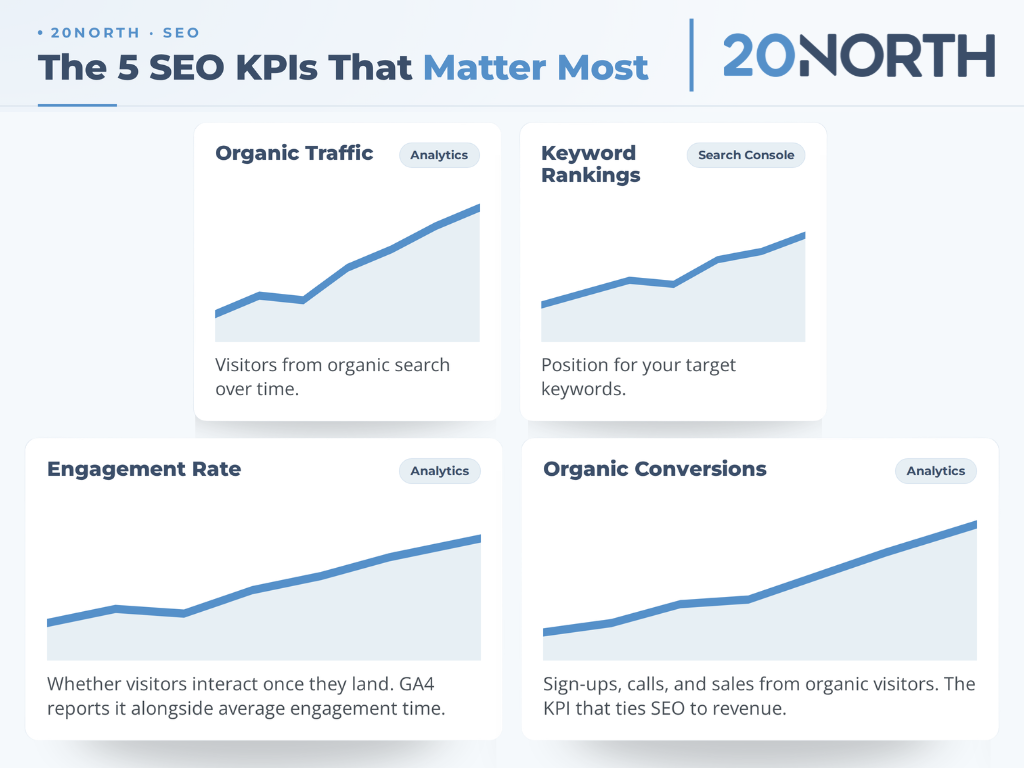
Organic Traffic
Organic traffic counts visitors who reach your site from a search engine, not from paid ads. Clicks come from Google Search Console and count how many times someone clicked through from the results page. Users and sessions come from GA4, with users counting distinct people, and sessions counting visits. For example, one person who returns three times is one user and three sessions. Pick a measure and stay consistent across reports so the trend line means the same thing every month.
A steady climb over months means your content is earning more search visibility. For a cleaner read on SEO, separate non-branded traffic from people already searching your brand name, since non-branded growth shows you are reaching new potential customers. This split is only reliable in Google Search Console, because GSC reports down to the individual query and lets you filter branded searches out. GA4 does not pass the search term, so it cannot tell branded from non-branded on its own. Non-branded organic traffic is one of the best starting KPIs, because it shows SEO is bringing in people who did not know of your brand yet.
Keyword Rankings
Keyword ranking tracks where your pages sit in search results for your target keywords. Rankings still matter, but read them with care. A page can rank well and lose clicks to an AI Overview or other SERP features, so pair rankings with click-through rate and organic visibility. Track rankings for the terms tied to real buying intent, not just high-volume words that never convert.
Top 3 and Top 10 Rankings
The top 3 positions capture the majority of organic clicks, so moving a keyword from position 7 to position 2 matters more than adding ten new keywords ranking on page two. Watch your top 3 count as a measure of the terms actually driving traffic, then use your top 10 count to spot pages sitting just outside the top 3. Those page-one-but-not-top-3 keywords are usually your fastest wins, since small on-page and internal linking adjustments can push them into click-earning territory.
Engagement Rate and Average Engagement Time
Once visitors land, do they stick around? In Google Analytics, engagement rate is the share of sessions that last longer than 10 seconds, include a conversion, or view more than one page. GA4 reports an average engagement time in place of the old average session duration, and bounce rate is now the inverse of engagement rate. Rising engagement usually means your content matches search intent and your user experience is solid.
Organic Conversions
Conversions are the point of the work. An organic conversion is a sign-up, a form fill, a call, or a sale from an organic visitor. Set up conversion events in Google Analytics so you can see which landing page and which target keywords bring qualified leads, not just traffic. This is the KPI that ties SEO to revenue, so it belongs on almost every dashboard.
Pro Tip: Pair two KPIs before you judge a page. High traffic with a low conversion rate means you are attracting the wrong visitors. Good rankings with a low click-through rate means your titles need work.
Supporting Metrics Worth Watching
These do not need daily attention, but they round out the picture:
- Technical issues: Crawl errors and indexing problems in Search Console that quietly block organic visibility. Watch these more often than the rest, since they can hurt rankings fast.
- Core Web Vitals: Google's page speed and stability scores. Weak Core Web Vitals hurt both rankings and user experience.
- Domain authority: A third-party estimate of your site's strength. Useful for tracking trends, not as a hard target.
- Brand awareness: Branded searches and direct visits that grow as your online presence builds.
- AI search visibility: How often your pages appear in AI Overviews and AI-generated summaries, a newer signal worth tracking.
Where to Track Your SEO KPIs
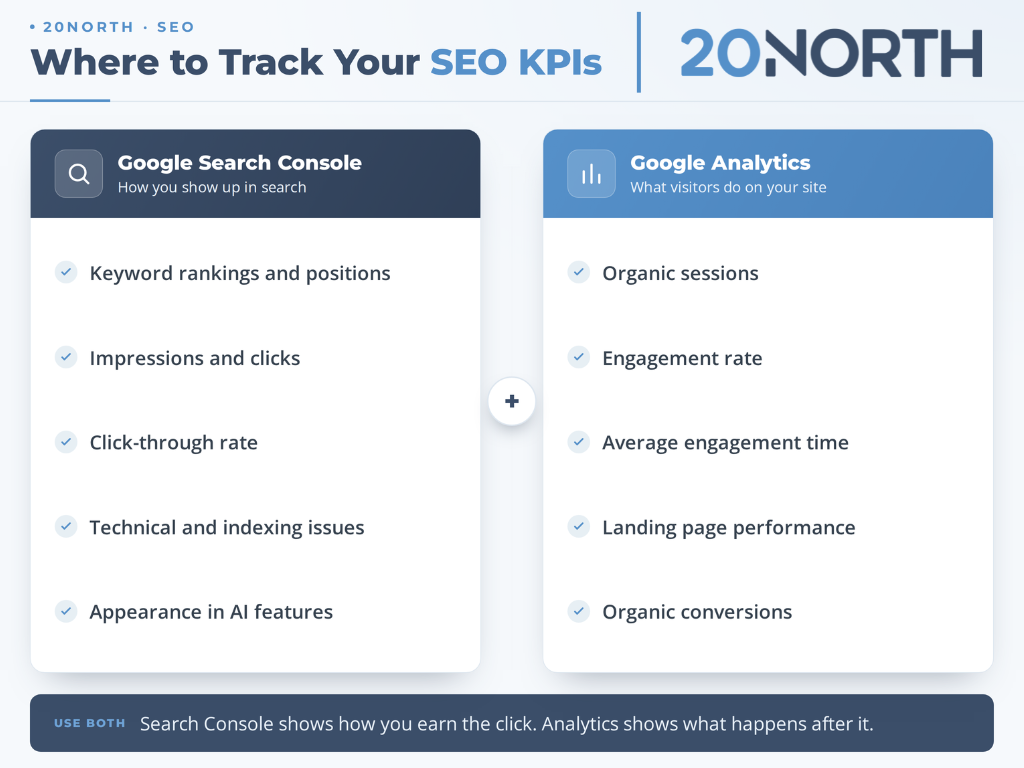
You only need two free tools to start:
- Google Search Console: Shows keyword rankings, impressions, click-through rate, technical issues, and how your pages appear in Google search, including AI features.
- Google Analytics: Shows organic sessions, engagement rate, average engagement time, landing page performance, and organic conversions.
Set a regular schedule and review the same KPIs each month. SEO moves slowly, so monthly check-ins beat daily ones for most metrics, and they cut down on noise. Compare against your own past numbers first. Industry benchmarks give context, but your trend line tells the real story.
Turn KPI Trends Into Action
Numbers only help if they change what you do next. Once you have a few months of data, look for patterns and act on them instead of guessing:
- Traffic up, conversions flat: your content draws visitors but the page does not move them to act. Review your calls to action and layout.
- Rankings up, clicks down: an AI Overview or competitor may be winning the click. Sharpen your title and meta description.
- Engagement dropping: the content may not match search intent. Revisit the query behind the page.
- Conversions climbing on a few pages: study what those pages do well, then repeat it across your site.
Reading the Numbers That Move Your Business
Measuring SEO performance comes down to picking the few SEO KPIs that map to your goals and watching them over time. Track organic traffic, keyword rankings, click-through rate, engagement, and organic conversions in Google Analytics and Google Search Console, then use those numbers to guide your next move with steady, data-driven decisions.
If pulling these numbers seems overwhelming, 20North is here to help. Our team of SEO professionals builds reporting around the KPIs that matter to your business through our SEO services and AI SEO services, so you know what your marketing efforts are earning. Start with a free AI SEO audit or get in touch to see where you stand.
.png)
.png)
.png)