
.png)
The Short Answer: Conversion tracking is a vital component of any successful digital marketing campaign, and there are various tools available to help you implement it effectively. These tools provide valuable insights into your website visitors and their behavior. You can also track conversions across different marketing channels and gain a comprehensive understanding of your campaign's performance.
How Conversion Tracking Works
Google Ads offers a variety of conversion tracking options to suit your specific needs. It provides a range of tools and features to help you gauge the effectiveness of your digital marketing efforts. One of these tools is the conversion pixel, a small snippet of code that allows you to track specific actions taken by users, such as completing a purchase or submitting a contact form.
To simplify the process of implementing conversion tracking codes, Google Tag Manager can be an invaluable tool. It enables you to manage and deploy various tracking codes across your website without the need for manual coding. With Google Tag Manager, you can streamline the implementation of conversion tracking and make necessary adjustments without extensive technical expertise.
Review Conversion Performance Across Channels
By setting up conversion tracking, you can gain valuable insights into your target audience and their interaction with your marketing channels. You can identify which ad groups, keywords, or search engine campaigns are driving the most conversions. This information allows you to allocate your advertising budget more efficiently, focusing on the marketing channels that yield the highest returns.
Conversion tracking helps you understand the impact of your digital marketing efforts beyond immediate website conversions. If you run an email campaign to generate leads, conversion tracking can help you measure the success of that campaign by tracking the number of qualified leads generated. This data allows you to evaluate the effectiveness of different marketing channels in driving conversions and make data-driven decisions for future campaigns.
Connect Online and Offline Conversion Data
Offline conversions, such as phone calls or in-store purchases, can also be tracked using conversion tracking methods. By integrating offline conversion data with your online campaigns, you can gain a comprehensive understanding of the customer journey and measure the overall impact of your digital marketing initiatives.
Use Conversion Data to Improve the Customer Journey
In addition to tracking conversions, historical data gathered through conversion tracking provides valuable insights into customer behavior and preferences. This information can guide your marketing strategies and decision making, allowing you to tailor your messaging and offers to better resonate with potential customers.
Conversion tracking also plays a significant role in optimizing your website for conversions. By analyzing user behavior and identifying areas of improvement, you can enhance the user experience and reduce friction points that may hinder conversions. For instance, by monitoring the performance of your contact form, you can identify any issues that may be preventing users from submitting the form and rectify them promptly.
Conversion tracking is an essential aspect of any digital marketing campaign. It enables you to measure the success of your conversion actions, gain valuable insights into your target audience, optimize your marketing channels, and make data-driven decisions to maximize your ROI. By leveraging tools such as Google Analytics, Google Ads, and Google Tag Manager, you can effectively implement conversion tracking and unlock the full potential of your digital marketing efforts.
Key Benefits of Conversion Tracking
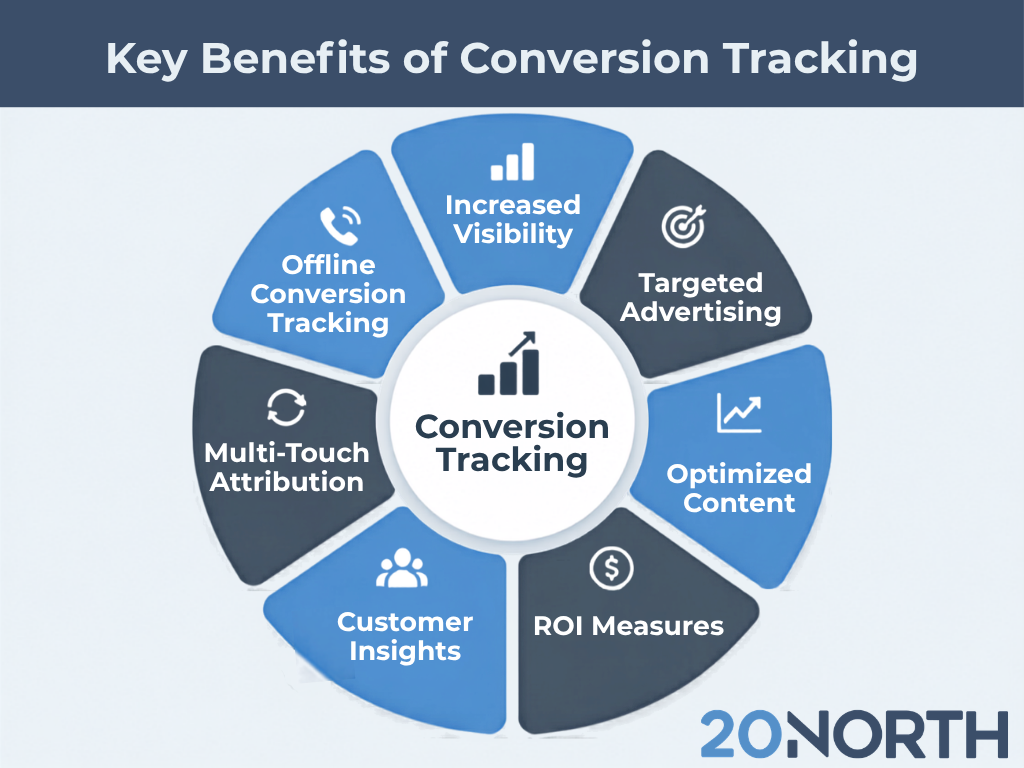
Increased Visibility
Conversion tracking allows you to see how your ads and website are performing in real-time. You can monitor the number of conversions, conversion rate, cost per conversion, and other key metrics to evaluate the effectiveness of your marketing campaigns. This increased visibility enables you to make data-driven decisions and adjust your strategies as necessary.
Conversion reporting gives you access to conversion data across your entire marketing funnel. You can view conversion metrics by date range, ad interaction type, and attribution model. This level of detail helps you understand which conversion actions matter most to your business goals.
Targeted Advertising
By tracking conversions, you can identify which ad groups, keywords, or campaigns are driving the most conversions. This information allows you to optimize your advertising efforts and focus on the marketing channels that are most likely to yield positive results. With conversion tracking, you can refine your targeting and allocate your advertising budget more effectively, ensuring that your ads reach the right audience at the right time.
This targeted approach increases the chances of attracting potential customers who are more likely to convert, resulting in higher conversion rates and a better return on investment. Paid advertising campaigns become more efficient when you know exactly which ad formats and targeting options drive results.
Optimization and Continuous Improvement
Conversion tracking provides you with valuable data that you can use to optimize your marketing campaigns and improve your website's performance. By analyzing the conversion data, you can identify trends, patterns, and areas of improvement. For example, if you notice that certain landing pages have a low conversion rate, you can make adjustments to the design, layout, or messaging to encourage more conversions.
Similarly, if specific keywords or ad groups are not driving conversions, you can optimize or replace them with more effective ones. Conversion tracking allows you to make data-driven decisions and continually refine your marketing strategies for better results over time. Seeking professional conversion rate optimization services can build on this data to create drastic improvements.
ROI Measurement
One of the primary benefits of conversion tracking is the ability to measure your return on investment accurately. By tracking conversions and associating them with specific marketing campaigns or channels, you can determine which strategies are generating the most revenue and providing the highest ROI.
This information enables you to allocate your marketing budget more efficiently, investing more in the campaigns that deliver the best results and reducing spending on less effective initiatives. Conversion tracking empowers you to make informed decisions about your marketing investments and optimize your ROI. A proper conversion report shows revenue by campaign, conversion time, and conversion lag so you can see the full picture.
Enhanced Customer Insights
Conversion tracking not only helps you measure conversions but also provides valuable insights into customer behavior. By tracking user interactions and conversion actions, you can gain a deeper understanding of your customers' preferences, interests, and motivations. This information allows you to refine your target audience, create more personalized marketing messages, and tailor your offerings to meet their specific needs.
Understanding your customers better through conversion tracking helps you build stronger relationships, improve customer satisfaction, and drive repeat business. When you track specific conversion actions like free trial signups or sales order completions, you learn what drives different stages within the customer journey.
Multi-Channel Attribution
In the current digital landscape, customers often interact with multiple touchpoints before making a conversion. Conversion tracking allows you to track and attribute conversions across different marketing channels. You can see if a customer finds you through a search engine, social media ad, or email campaign. Conversion tracking helps you understand the contribution of each marketing channel to the overall conversion process.
This multi-channel attribution gives you a comprehensive view of the customer journey and enables you to optimize your marketing mix by investing in the channels that drive the most conversions.
Offline Conversion Tracking
While digital marketing primarily focuses on online activities, conversion tracking can extend beyond the online realm. With offline conversion tracking, you can connect offline actions, such as phone calls or in-store purchases, to your online marketing efforts. By integrating offline conversion data into your tracking systems, you can accurately measure the impact of your online campaigns on offline conversions.
This capability allows you to understand the complete customer journey, evaluate the effectiveness of your marketing channels holistically, and make informed decisions about your marketing strategies.
Understanding Conversion Reporting
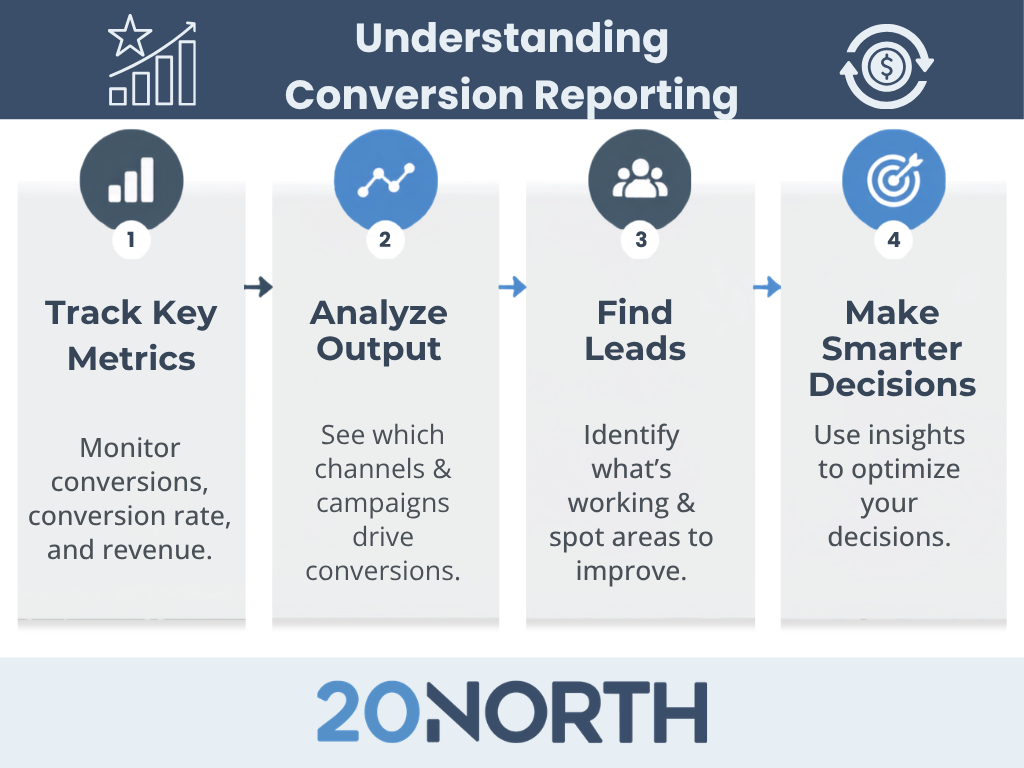
Conversion reporting brings all your conversion data together in one place. Standard reports in platforms like Google Ads show conversion performance across campaigns, ad groups, and keywords. You can customize report column headers to display the metrics that matter most to your business.
A conversion performance report might include columns for conversion rate, revenue, cost per conversion, and conversion value. You can filter by date range, time zone, and specific conversion action. Some reports even support multiple-answer question formats where you can select different column views or use a drop-down menu to change attribution models.
Data sources for conversion reporting include your website analytics, ad platforms, CRM systems, and third-party tracking tools. When these data sources connect properly, you get a complete picture of how marketing drives business outcomes.
Once your data sources are connected, conversion reporting becomes a simple four-step process:
- Track key metrics: Monitor conversions, conversion rate, and revenue so you always know how your campaigns are performing.
- Analyze output: Compare results across channels and campaigns to see which ones drive the most conversions.
- Find leads: Identify what's working and spot the areas that need improvement before they cost you more budget.
- Make smarter decisions: Use these insights to shift spend, refine targeting, and optimize your marketing for better results.
Improve Your Conversion Reporting With 20North
Conversion tracking is a foundational piece of any digital marketing strategy. It provides you with valuable insights, improves targeting and optimization, measures ROI, enhances customer understanding, and allows for multi-channel attribution.
20North is a full-service digital marketing agency in Atlanta. Our team pairs search engine optimization with paid media, email marketing, and web development to measure conversion data across every channel and focus on driving meaningful business outcomes. We help you implement conversion tracking tools then use that data to drive continuous improvement.
Embrace the power of conversion tracking and take your marketing campaigns to the next level. Contact 20North today to discuss how conversion reporting can improve your results.
.png)
.png)
.png)