The Short Answer: Search intent is the reason behind a search query, and the actual goal a person has when they type something into a search engine. It falls into four main types: informational, navigational, commercial, and transactional. When your content matches the intent behind a target keyword, you give Google a strong reason to rank your page and give a potential customer a reason to stay.
Ranking for the right keyword means little if the page behind it answers the wrong question. A visitor who wanted a quick definition and landed on a sales page will leave, and a shopper ready to buy will do the same if they reach a long explainer page. User intent is the bridge between what someone searches and what they actually want, and it has become one of the most important ideas in modern search engine optimization.
What Is Search Intent?
User search intent is the purpose behind a search. Someone who searches a specific term has a goal, and the search engine works to understand the meaning of that query and return the most relevant results. Two people can use similar words and still want different things, which is why intent, not the keyword alone, drives what ranks. Someone searching “apple” might want the fruit, while another person wants the tech company, so Google reads the surrounding context to decide which result set fits the user’s intent.
This matters because a modern search engine leans heavily on artificial intelligence to read a query and judge what a searcher is really after. Google states that satisfying intent is a core goal of its ranking systems, and its own analysis of user behavior shows that matching the intention behind a query is now more decisive than keyword repetition alone. For anyone building a content strategy, that shift changes how you choose keywords and how you build each page.
The Four Types of Search Intent
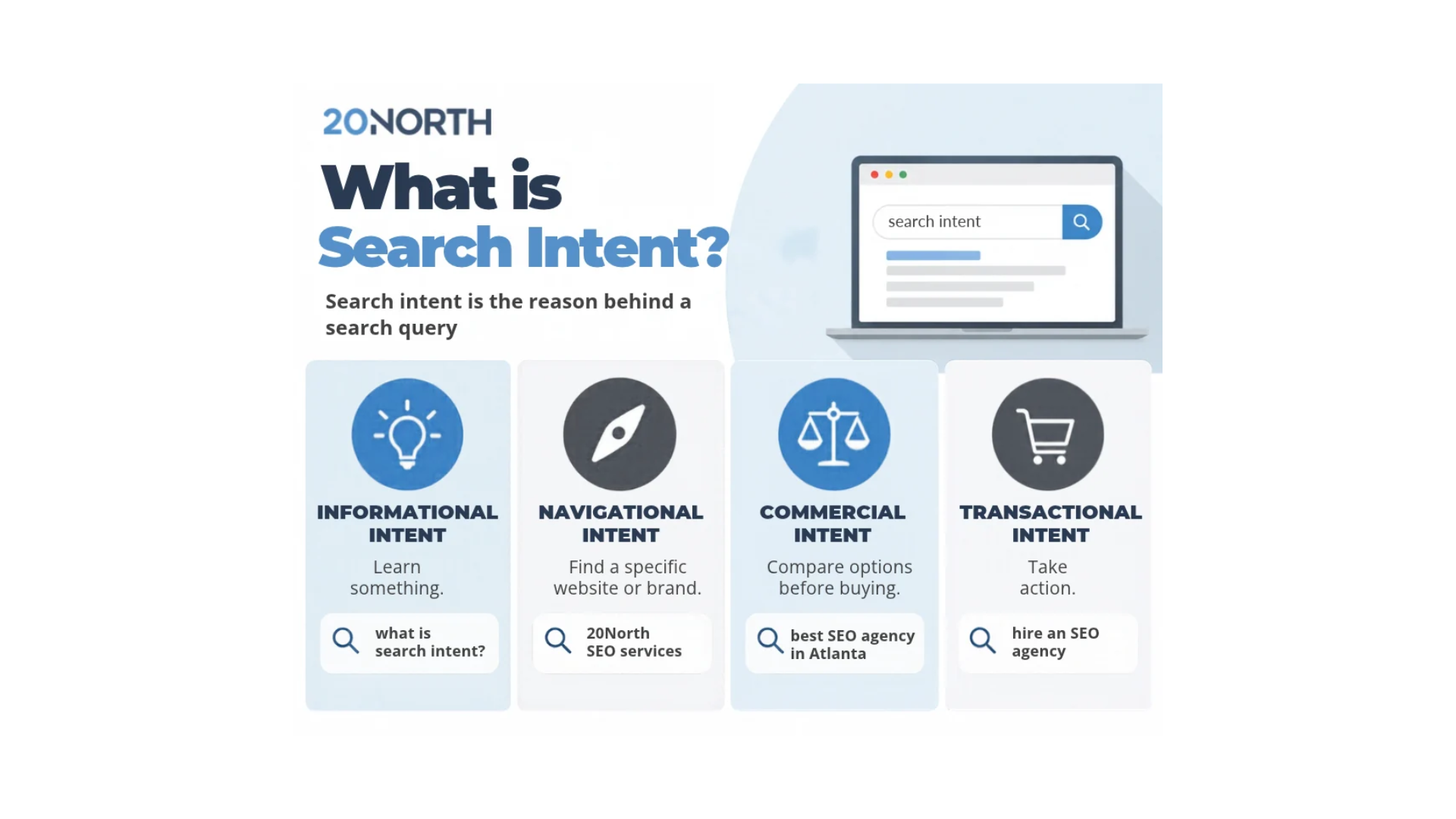
Most search queries fall into one of four intent categories. Understanding these intent keywords helps you decide what kind of page to build and what the reader expects to find.
Informational Intent
Informational intent means the user wants to learn something. These searches often start with “what,” “how,” or “why,” such as “what is search intent marketing.” On the SERP, informational queries usually surface featured snippets, People Also Ask boxes, and how-to guides rather than product listings, which tells you Google expects an answer, not a sales pitch. A searcher with informational search intent is not ready to buy, so the best answer is educational content: a blog post, a guide, or a definition that explains the topic clearly. Informational content earns trust early and keeps your brand in front of a potential customer while they research.
Navigational Intent
Navigational intent means the user is looking for a specific website or brand. A query like “20North SEO services”, where the company is mentioned explicitly, signals that the person already knows where they want to go. This can also include product names tied to a specific company, such as “Klaviyo flows” or “Shopify checkout,” where the searcher is after one brand’s offering rather than a general category. Pages that win navigational searches are usually a homepage, a branded landing page, or a named service page. Strong navigational visibility protects your online presence and keeps competitors from intercepting people who are searching for you by name.
Commercial Intent
Commercial intent sits between research and purchase. The user is comparing options and wants help deciding, with searches like “best SEO agency in Atlanta” or “top email marketing platforms.” Comparison pages, reviews, case studies, and detailed service pages serve this intent well. A reader with commercial intent is a warm lead, so relevant content that addresses their customers’ needs can move them toward a decision.
Transactional Intent
Transactional intent means the user is ready to act. Transactional queries include “hire an SEO agency” or “buy running shoes online,” and these transactional search queries usually point to a product page, a pricing page, or a contact form. Transactional intent is closest to revenue, so the matching page should remove friction and make the next step obvious. Matching transactional search intent with the right page is often the difference between a visit and a conversion.
Why Search Intent Matters for SEO
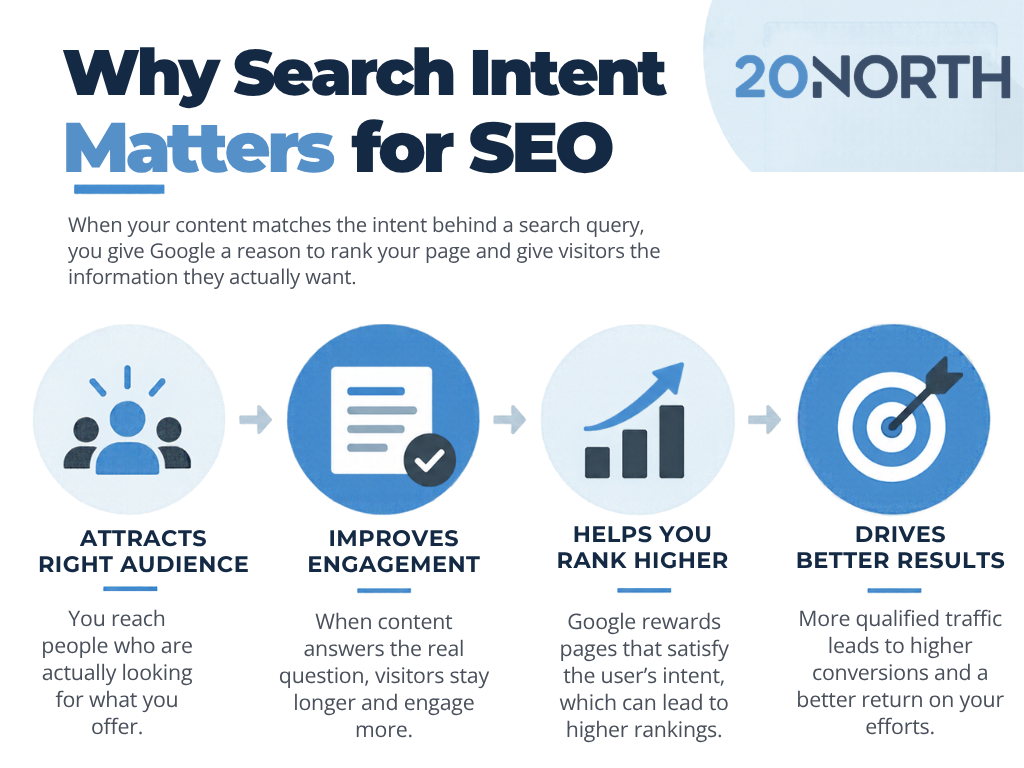
Google’s job is to satisfy the person doing the search, so it measures how well a page meets the intent behind a query. When your content answers the real question, users stay longer, engage more, and signal to the search engine that your page deserves to rank. When it mismatches content and intent, users bounce back to the search results which tells Google your page was not the right answer.
Intent also protects the quality of your organic traffic. A ranking blog post for a transactional keyword might bring visitors, but those visitors will not convert because the page does not match what they came to do. Aligning each target keyword with the correct page type means the people who arrive are the people most likely to act, which improves both user experience and return on your digital marketing effort.
As AI-powered search features reshape how people find answers, intent has only grown in importance. Answer engines and AI Mode pull from pages that address a question directly and completely, so content built around genuine user intent is better positioned across Google search and AI search alike.
How to Identify Search Intent for a Keyword
The fastest way to read the intent behind a keyword is to search it yourself and study the results. Google has already decided what satisfies that query, and the ranking pages reveal the answer.
- Look at the page types that rank: If the first page is full of guides, the keyword is informational. If it is product and category pages, the intent is transactional.
- Check the SERP features: Shopping results point to commercial or transactional intent, while a featured snippet usually signals informational intent.
- Read the modifiers in the query: Words like “best” or “compare” lean commercial, while “buy,” “price,” or “hire” lean transactional.
- Use intent data from your tools: Keyword research platforms often label intent, and reviewing your own long-tail keywords shows which specific phrases bring qualified visitors.
A broad, short search term can carry several intents at once, so detailed keyword phrases usually give a clearer signal about the user’s intent and the page you should build.
How to Match Content to Search Intent
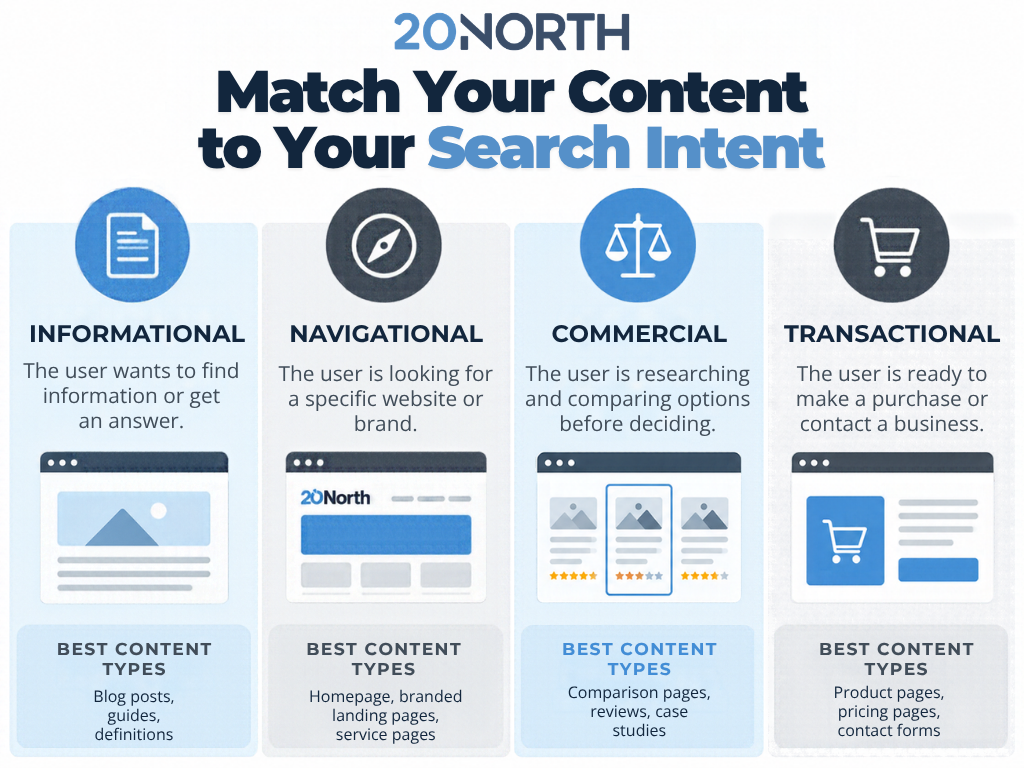
Once you know the intent, the page almost designs itself. The goal of intent marketing is to give each visitor the content format they expect, then guide them to a logical next step.
- Informational search: publish clear educational content that answers the question first, then adds depth. Link to related service pages so curious readers can go deeper.
- Commercial intent: build comparison pages, case studies, and service pages that help the reader weigh options and see proof.
- Transactional intent: keep the landing page focused, state the offer plainly, and make the call to action easy to find.
- Navigational intent: keep branded pages current and easy to reach so people searching for you land exactly where they should.
This intent-first approach is the backbone of effective content marketing and a smart marketing strategy. When every page serves a defined intent, your site builds topical authority, earns more relevant results in search, and connects with your target audience at each stage of their journey.
Build a Search Intent Strategy With 20North
Search intent turns keyword research into a plan that actually drives growth. Mapping informational, navigational, commercial, and transactional intent to the right pages helps you rank for the terms that matter, attract the right potential customer, and turn more search traffic into revenue.
20North is a full-service digital marketing agency in Atlanta that builds search strategies around real user intent across SEO, AI SEO, paid advertising, email marketing, and web development. Contact our team to build a content strategy that matches what your customers are actually searching for.