The Short Answer: Content decay is the gradual decline in organic traffic a page loses over the months and years after it peaks, usually because the information goes stale, search intent shifts, or newer content starts to outrank it. You reverse it by running a content audit, finding the declining pages in Google Search Console, and refreshing them with accurate, relevant content.
A page that once pulled steady traffic can slowly slip down the search results without anyone noticing. Rankings hold for a while, then a gradual decline sets in, organic clicks fall month over month, and a once top-ranking page lands on the second page. This slow fade is content decay, and it reaches almost every site that publishes regularly. The upside is that decaying pages are often easier to recover than brand-new pages are to rank, because they already carry authority and history.
What Is Content Decay?
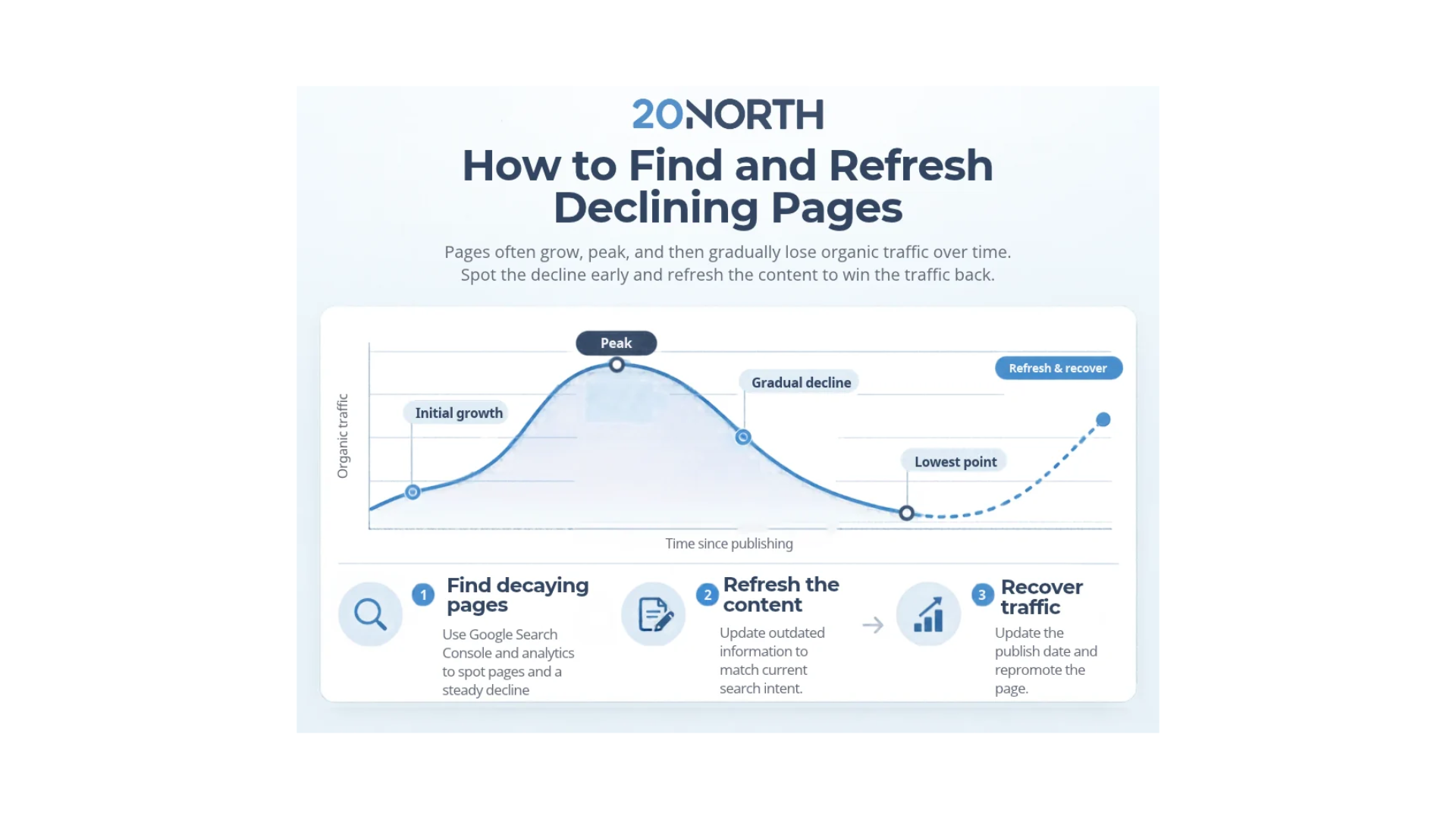
Content decay is the steady loss of organic traffic and search engine rankings that older content experiences over time. A blog post publishes, climbs the search results, holds a strong position, and then slowly gives up ground. The movement is rarely a sudden drop tied to one event. It is a steady decline that plays out across months, which is exactly what makes it easy to miss.
Decay is different from a page that never ranked at all. These are pages that once earned steady traffic and organic clicks, then started losing both. Catching the pattern early is what separates a quick refresh from a full rewrite.
What Causes Content Decay?
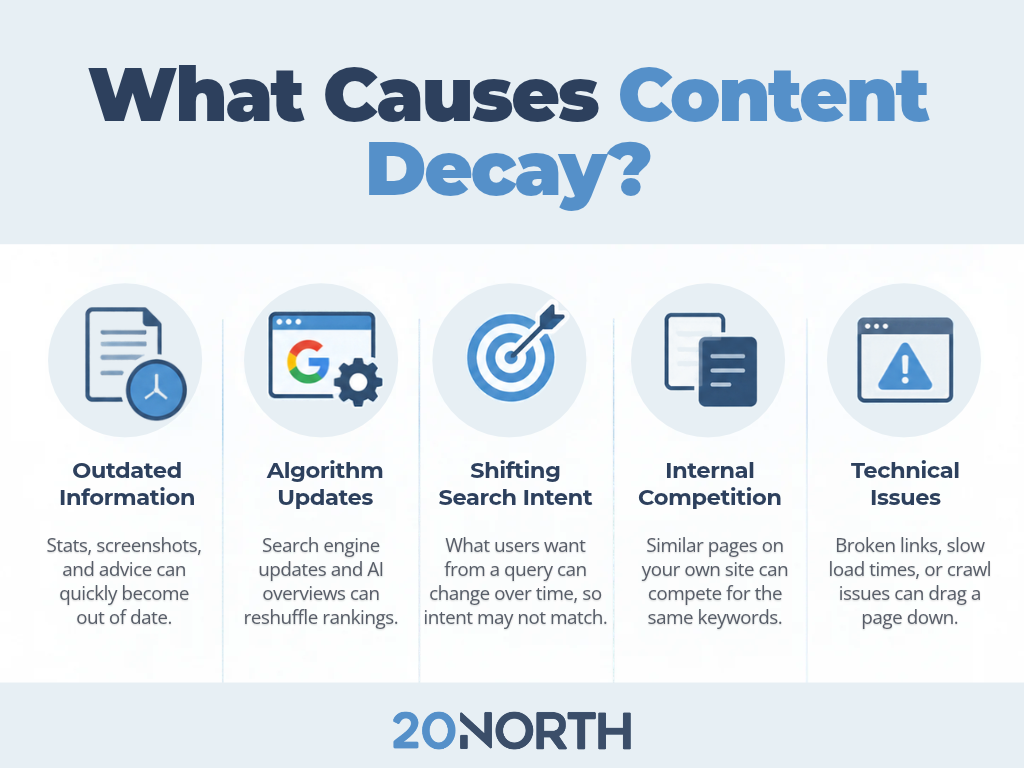
Pages decay for a handful of common reasons, and knowing which one applies points you straight to the fix.
Outdated Information
The most frequent cause is that the content is out of date. Statistics age, screenshots change, and advice that was accurate years ago no longer matches reality. Readers leave when they spot outdated information, and search engines reward fresher content that answers the question better. An old publish date on an article about a fast-moving topic is a warning sign that the page may be serving outdated content. Old content left untouched for years is often the easiest kind of page to lose.
Algorithm Updates and AI Overviews
Search engine algorithms change constantly. A single one of Google’s algorithm updates can reshuffle an entire page of search results, and content that sat comfortably at the top can drop within days. AI has added another layer. An AI overview or an answer inside Google AI Mode can resolve a query directly on the search engine results page, which pulls organic clicks away from the links below it. Earning AI citations inside those answers is becoming its own discipline as AI reshapes how people search.
Shifting Search Intent
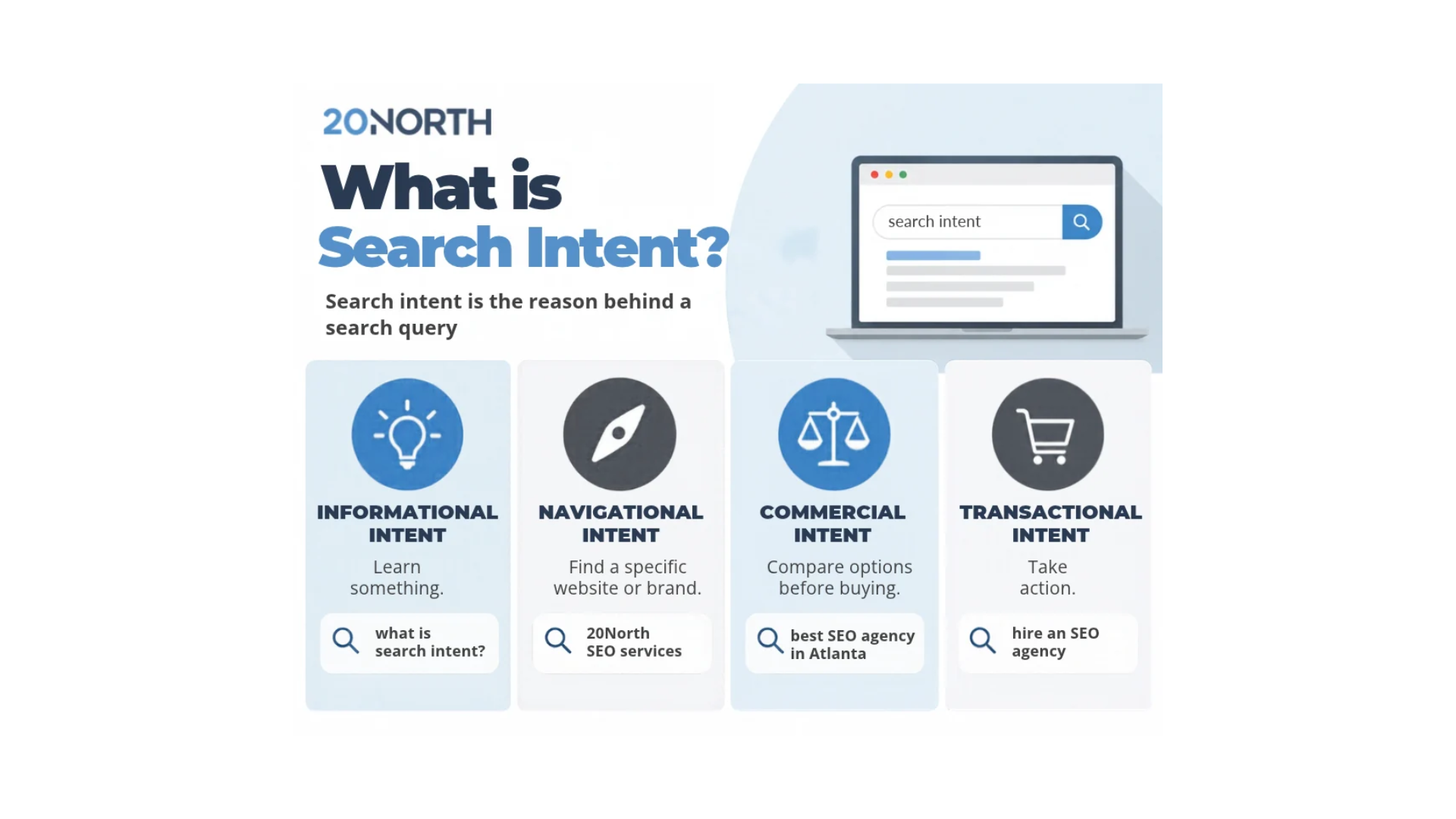
Sometimes the page is fine, but what people want from the query has changed. This intent shift happens when searchers start expecting a different format, a product page instead of an article, or a comparison instead of a definition. When your content no longer matches the current search intent, rankings slide even though nothing on the page got worse. Checking what currently ranks for your target keywords shows whether user intent has moved.
Internal Competition
Publishing new content on a similar topic can cannibalize your older posts. When two pages chase the same target keywords, they compete against each other in the search results, and neither performs as well as one strong page would. This internal competition is a common and overlooked driver of decay. Fixing keyword cannibalization usually means consolidating pages or adding internal links that pass authority to the version you want to rank.
Technical Issues
A technical issue can drag a page down on its own, including a broken redirect, a slow load time, lost internal links, or a page accidentally blocked from crawling. These problems hurt both user experience and rankings, so they are worth ruling out before you rewrite a single sentence.
How to Find Decaying Pages
Finding decay is a measurement exercise. Start with Google Search Console, which reports clicks and impressions for every page over time. Compare the last few months against the same stretch a year earlier and watch for a gradual decline in organic clicks or a falling click-through rate. Pair that with Google Analytics to see how a drop in traffic affects engagement metrics like time on page and conversions. A sudden drop usually points to a technical issue or a specific algorithm update, while the slow decline of content decay is easy to write off as normal noise until months of lost traffic add up.
From there, run a content audit across the whole site. List every page, pull its traffic trend, note its publish date, and flag anything in a steady decline. SEO tools speed this up by tracking search rankings and surfacing pages that have slipped for their target keywords. The output is a prioritized list, with the pages that lost the most traffic and hold the best recovery potential at the top.
How to Refresh Declining Pages
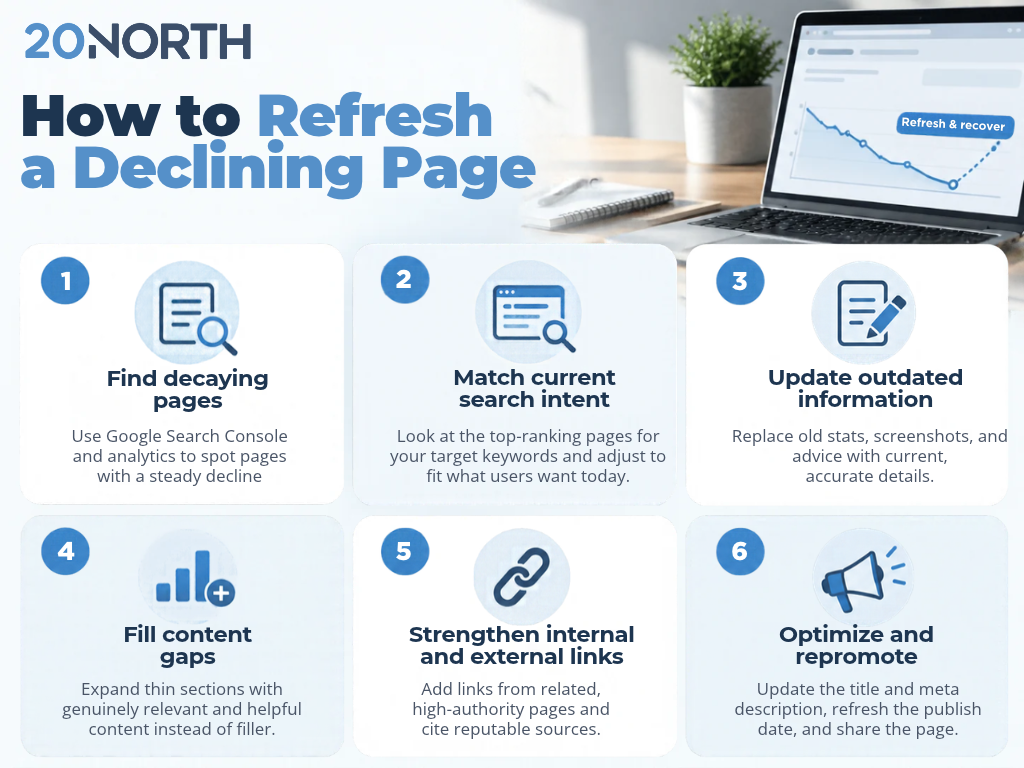
Once you know which pages are decaying, refreshing them is usually faster than building something new. A refreshed page keeps its existing authority, so content updates tend to pay off quickly. HubSpot reported that optimizing its own older posts lifted their monthly organic search views by an average of 106%.
Here are the moves that recover a declining page:
- Replace outdated information, update aging statistics with current numbers, and correct anything that no longer holds true.
- Re-read the current top-ranking page for your query, then adjust your format and depth to match what users want today.
- Fill content gaps and expand thin sections with genuinely relevant content instead of filler.
- Point internal links from related, high-authority pages toward the one you are refreshing, and add external links to reputable sources.
- Rewrite the title and meta description around the right target keywords, then update the publish date once the new content is live.
- Repromote the refreshed post on social media and by email to send fresh engagement signals back to the search engine.
Fresh content signals to Google Search that the page is still maintained, which helps it hold position as search rankings shift around it. A full rewrite only makes sense when the page is so far out of date that editing cannot save it. For most older posts, a focused refresh recovers the lost traffic and protects it against the next round of change.
Make Content Refreshing a Habit with 20North
Content decay is not a one-time cleanup. Search engine algorithms, user intent, and competitors all keep moving, so the online content you refresh this quarter can start slipping again next year. Building a regular content audit into your calendar, every quarter or twice a year, keeps older content earning steady traffic instead of fading out. The sites that treat refreshing as routine rarely watch a strong page decay all the way to the bottom.
20North builds content audits and refresh plans into our SEO services, and our AI SEO work helps your pages stay visible across AI overviews and traditional search results. Refreshed content works even harder when it is supported across channels, which is why we pair organic work with paid media, email marketing, and web development that keeps your site fast and easy to crawl. Request a free audit to find out which of your pages are decaying and which are ready for a quick win.