
.png)
The Short Answer: The best AI SEO tools in 2026 pair classic SEO data with AI features. Top picks are Profound for AI visibility tracking, Semrush and Ahrefs for all-in-one research, Surfer for content optimization, SE Ranking for affordable tracking, and Google Search Console for free AI search reporting. The right tool depends on your budget, your team, and on what matters most to you: keyword research, content optimization, or AI visibility.
AI changed how people search, and the tools that help you rank changed with it. Today's AI SEO tools do more than track keywords. They optimize content for AI Overviews, watch how AI search engines describe your brand, and automate the slow parts of search engine optimization.
Our Top AI SEO Tool Picks for 2026
No single tool wins at every job, but if AI search visibility is your priority, Profound leads the field. The picks below are grouped by what they do best, so check each site for current plans and any free trial.
Google Search Console: The Free Baseline
Every site should use Google Search Console before paying for anything. It shows clicks, impressions, and average position for free. In 2026, Google added generative AI performance reports that show how often your pages appear inside an AI Overview and AI Mode, so you can measure AI search visibility without a paid subscription.
Profound: Best for AI Visibility
Profound leads the newer category of tools built to watch how generative AI platforms talk about your brand. It runs hundreds of prompts across ChatGPT, Perplexity, and Google AI Mode on a schedule, then reports your mention rate, your share of voice against competitors, and how each platform describes you. Semrush's AI toolkit covers similar ground inside its broader suite, but if generative engine optimization is a priority, a dedicated platform like Profound gives the deepest view and data that classic tools cannot.
Semrush and Ahrefs: All-in-One Suites
Semrush and Ahrefs are the most established all-in-one SEO platforms. Both handle keyword research, rank tracking, technical audits, and competitor analysis in one place. As of 2026, both also track AI visibility, so you can see how often your brand shows up in AI search results next to your normal rankings. They are the strongest fit for agencies and larger in-house teams that need depth across every SEO task.
Surfer: Content Optimization
Surfer is built around its content editor. As you write, it analyzes the top-ranking pages for your target keyword and gives a live content score, along with the terms and headings you are missing. It connects to Google Docs and WordPress, which makes it popular with content creators who want to produce SEO-optimized content without leaving their writing tool. Clearscope is a close alternative if your focus is purely on content quality.
SE Ranking: Affordable All-in-One
SE Ranking gives small businesses a lighter, lower-cost version of the big suites. You get keyword research, rank tracking, and site audits at a friendlier price, plus a 14-day free trial to test it first. It is a solid starting point for solo marketers and small teams.
Pro Tip: Start with Google Search Console and one paid tool that matches your biggest gap. Adding five tools at once wastes money and buries your team in data they will not use.
What Do AI SEO Tools Do?
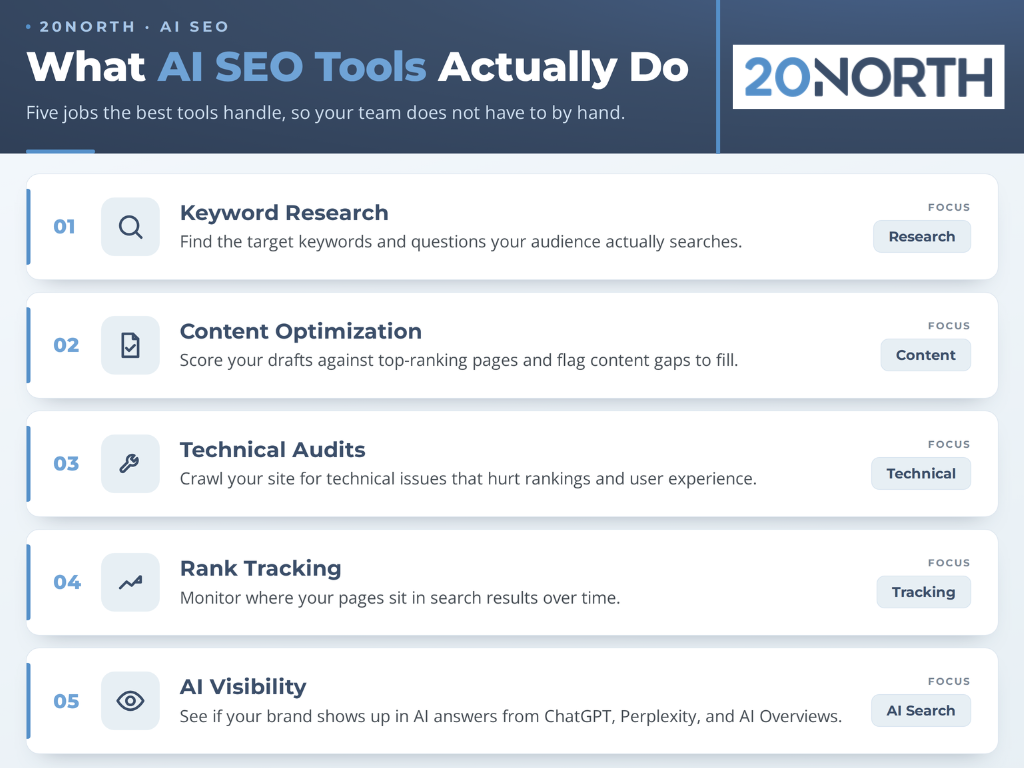
An AI SEO tool is a platform like Profound, Semrush, or Ahrefs that applies AI to the work of getting found in search, including the newer job of tracking how AI engines mention your brand. Instead of guessing, you get data-backed direction on where to focus. Most cover a few core jobs:
- Keyword research: Find the target keywords and questions your audience searches, mapped to user intent.
- Content optimization: Score your draft against top-ranking pages and flag content gaps to fill.
- Technical audits: Crawl your site for technical issues that hurt rankings and user experience.
- Rank tracking: Monitor where your pages sit in search results over time.
- AI visibility: Track whether your brand appears in AI-generated answers from ChatGPT, Perplexity, and Google AI Overviews.
The strongest platforms go beyond the basics, adding AI visibility tracking that shows how ChatGPT, Perplexity, and Google AI Mode describe you, plus predictive analytics that flag which pages may rise or fall. That is the real shift in 2026: the best tools do not just help you rank in traditional search, they measure your standing in AI answers too.
How to Choose the Right AI SEO Tool
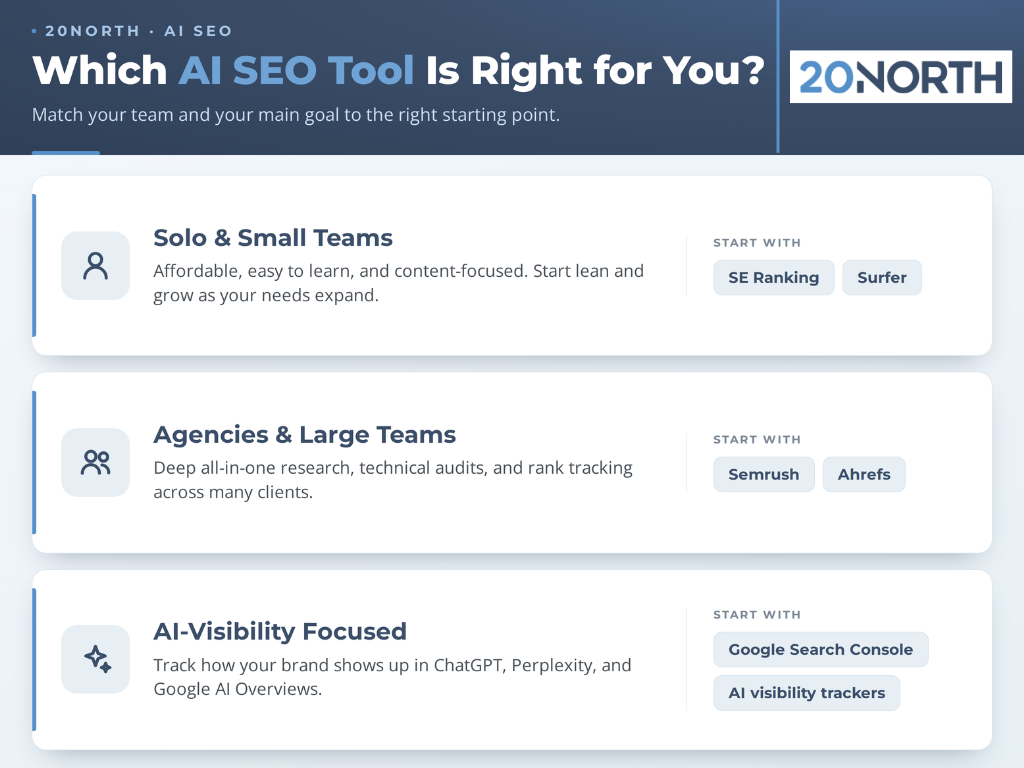
The best AI SEO tool is the one your team will actually use. Weigh these points before you buy:
- Your main goal: Pick for content optimization, technical audits, or AI visibility, not all three at once.
- Team size: Solo creators and small in-house teams do well with SE Ranking or Surfer. Agencies lean on Semrush or Ahrefs.
- Free trial: Test with real content and real keywords during the free trial before committing.
- Learning curve: A complex tool no one understands adds technical issues instead of removing them.
- AI coverage: If AI search matters to you, confirm the tool tracks AI Overviews and other AI-generated search results.
Most teams land on one suite plus one specialist tool. That combination covers daily SEO work and the AI side without overlap.
Tracking Is Step One. Improving Is Step Two.
The tools above show you where you stand. Earning more AI citations is a separate job, and it helps to know what these engines look for. AI answers tend to quote content that addresses a question directly, supports its claims with original data, and uses clear structure and schema so models can read and reuse it. Off-page trust matters too: third-party mentions, reviews, and a strong topical footprint all raise the odds an AI engine cites you. The tools measure these signals; acting on them is what moves the numbers. Our guide to answer engine optimization techniques breaks down the formats that earn citations.
Picking the Right Tool and the Right Partner
The best AI SEO tools in 2026 give you data for keyword research, content optimization, rank tracking, and AI visibility in one workflow. Start with free Google Search Console, match one paid tool to your biggest gap, and use the free trial before you commit. Tools speed up the work, but they still need a person to read the data and turn it into a plan.
That is where 20North can help. Our team of SEO specialists pairs leading AI-powered SEO tools with real strategy, so your content earns rankings in both traditional search results and AI-generated answers. Explore our AI SEO services, or start with a free AI SEO audit to see where your site stands. Get in touch today and we will handle the rest.
.png)
.png)
.png)