The Short Answer: Query fan-out is the technique an AI search system uses to turn one search query into many related searches at once, run them in parallel, and combine the results into a single answer. It is the engine behind Google AI Mode and a growing share of AI search results.
Type a question into an answer engine today and you are not running one search. Behind the screen, the AI model breaks your original query into smaller related queries, runs them together, and builds one response from everything it finds. This approach is called query fan-out, and it is reshaping how pages get discovered. A page that ranks well in traditional search can still go missing from an AI-generated answer, and query fan-out is the reason why.
What Google Means by Query Fan-Out
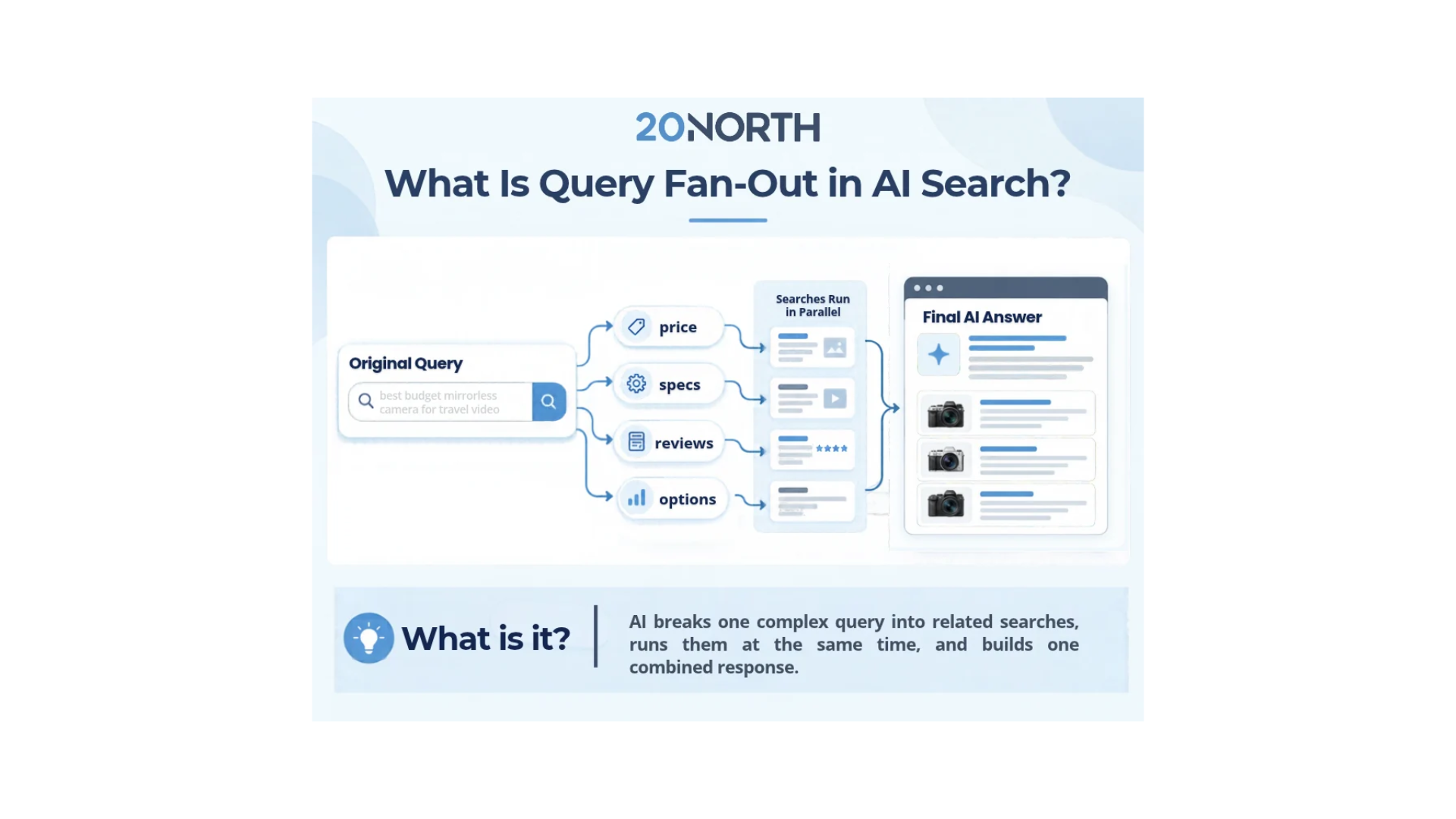
Query fan-out is a search technique where an AI system takes a single user query and generates several related queries that each cover a subtopic of the original question. Instead of returning one set of search results for the exact words you typed, the AI system runs these related searches at the same time and pulls passages from the pages that best answer each one.
Google introduced the term when it launched Google AI Mode in 2025.Google describes it as issuing multiple related searches at once across subtopics and data sources, then bringing those results together into one response. Google put the monthly reach of AI-powered search experiences built on this approach at about 1.5 billion people in mid-2025, which is why the shift matters for any brand that depends on search traffic.
Simple questions do not always trigger it. A factual search query like “capital of Spain” usually returns a direct answer without fanning out. A layered question like “best budget mirrorless camera for travel video” is the kind that triggers a fan-out. The more complex and open-ended the question, the more related queries the system tends to generate.
How Query Fan-Out Works
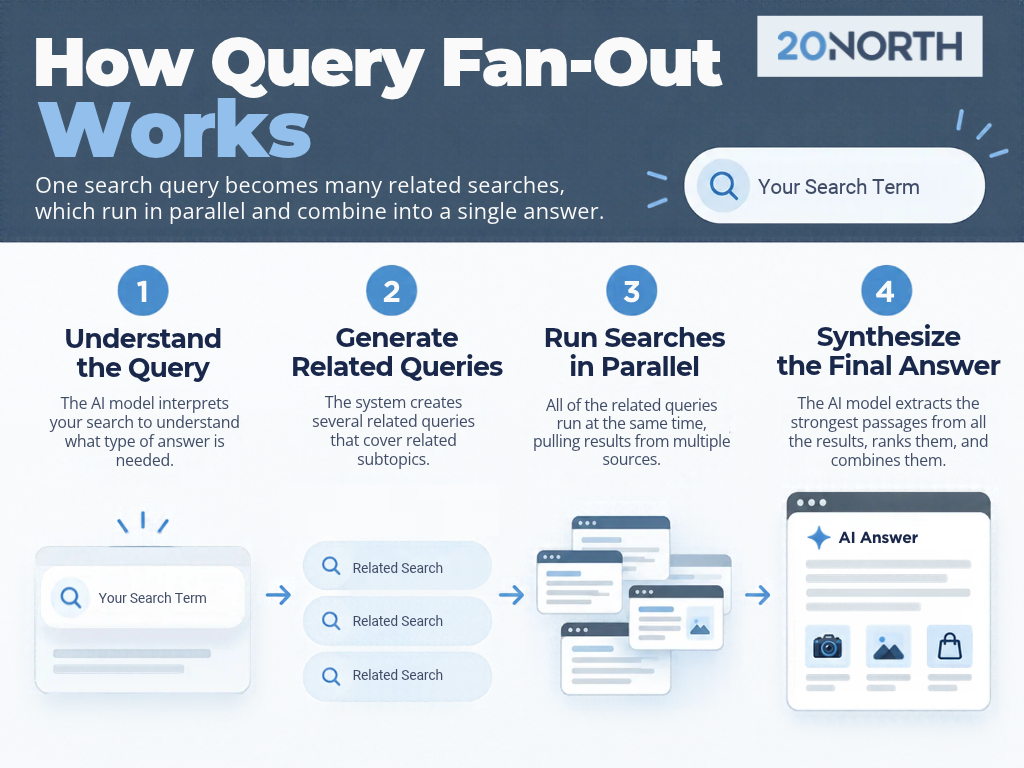
A query fan-out runs through a short sequence before you ever see an answer. The steps happen in a fraction of a second, which is why the whole process feels like one quick search. Each stage shapes what the final answer looks like and which pages it pulls from. Here is what happens behind the AI search results.
Understand the Query
The AI model first interprets your search query to work out the search intent, how complex it is, and what kind of answer fits. This step decides whether a single query needs to fan out at all.
Generating Related Queries
Next, the system creates related queries, often called synthetic or implicit queries, that cover subtopics you did not type but probably care about. One question about a product can produce related questions about price, specs, alternatives, and reviews.
Run Searches in Parallel
The related searches run at the same time rather than one after another. Each related query returns its own search results, and the AI system draws on the Google search index along with real-time sources like the Knowledge Graph and shopping data.
Synthesize the Final Answer
The AI model then extracts the strongest passages across every related search, ranks them, and synthesizes one final answer with links to sources. It cites the pages that best answer the fan-out as a whole, not just the original query.
Query Fan-Out vs Traditional Search
Traditional search matches your words to webpages and hands back a ranked list of links for you to click. One query produces one set of results, and your job as a searcher is to scan and choose.
Query fan-out changes that exchange. A single user query becomes many related searches, and the answer engine does the scanning for you. Because answer engines now generate responses instead of ranking links, a page no longer competes for one keyword. It competes passage by passage across every related query the system runs. This is also what separates Google AI Mode and AI Overviews from a standard page of ranked links. For content creators, that reframes the whole job of earning visibility.
Why Query Fan-Out Matters for Your Content
When one answer covers a whole topic, fewer people click through to individual pages. That worries a lot of content creators, but AI search results still cite and link sources, and your pages can appear inside the answer. The goal is no longer to rank a single link. It is to become a source the AI model quotes across related questions.
Brand visibility now depends on your AI search visibility, meaning whether your content shows up across the hidden related searches and not just the one phrase a person typed. Pages that answer follow-up questions, cover related topics, and read as authoritative content tend to earn more citations. That is the same foundation strong SEO has always rewarded, extended to AI-driven search. This is where the gap between AI vs traditional search shows up in traffic numbers.
Pro Tip: Type one of your core topics into Google AI Mode and read the answer. Note the related questions it raises and which sites it cites. Those related queries are a map of the content you need to cover to get picked up.
How to Optimize for Query Fan-Out
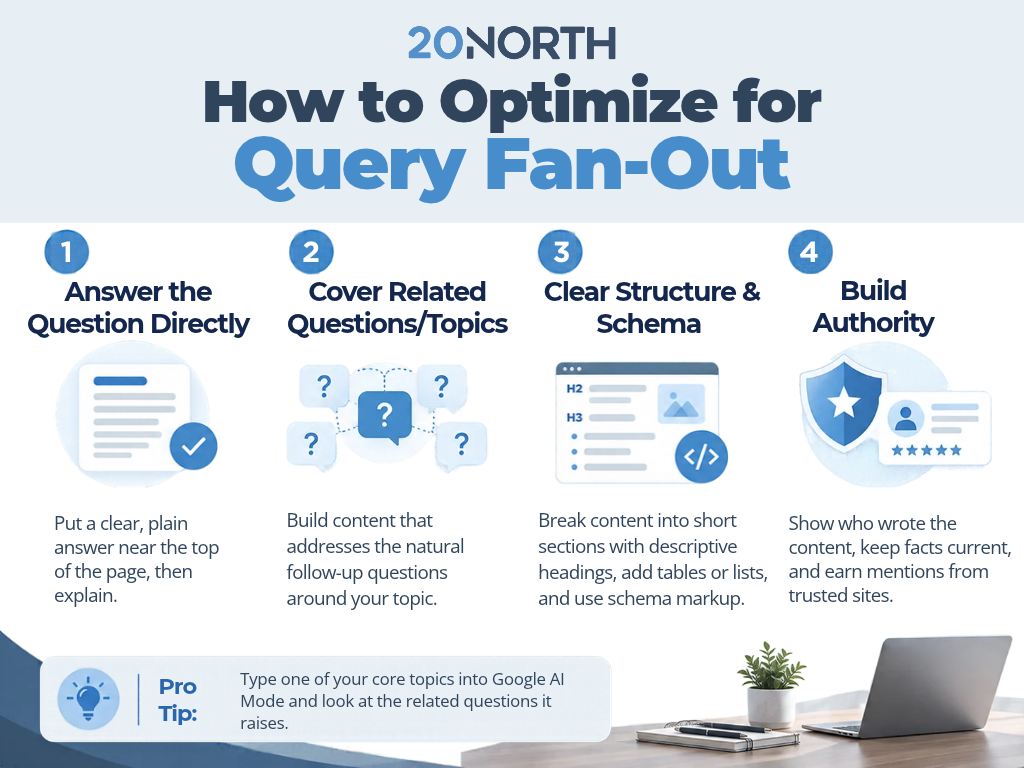
You cannot buy placement in AI search results. You earn it by being the clearest, most reliable source across a topic. What changes under fan-out is the surface area, because your page has to hold up across every related query the system runs, not just the one a person typed.
Answer the Question Directly
Put a plain answer near the top of each page, then explain. AI search systems favor content that states the point first. A direct answer gives the model a clean passage to lift into its response.
Cover Related Questions and Topics
Because the system fans out into related queries, build pages that address the natural follow-up questions around your subject. Group related points together so one page can satisfy several sub-queries at once. Topic clusters work better than a single-keyword page here, because one cluster can answer several of the related queries a fan-out generates.
Use Clear Structure and Schema Markup
Break content into short sections with descriptive headings, and add tables or lists where they help. Clear section boundaries matter under fan-out because the model pulls individual passages rather than whole pages, and a well-bounded section is easier to match to one related query. Adding schema markup tells the search engine what each section means.
Build Authority
Show who wrote the content and why they know the subject, keep facts current, and earn mentions from trusted sites. Authority acts as the tiebreaker across a fan-out rather than on a single ranking, because it decides which source gets quoted when several pages answer the same related query well. Brand authority in AI search is built on author credentials, current facts, and citations from sites the model already trusts.
Get Found in AI Search With 20North
Query fan-out is the process running underneath most AI search results.. One search query becomes many, the answer engine runs them together, and it cites the sources that best answer the full set. The brands that win are the ones whose content covers a topic completely, reads clearly, and earns trust. Query fan-out rewards depth and clarity, the same habits that have always made content worth ranking.
At 20North, an Atlanta digital marketing agency, we build search strategies that span traditional search and AI search systems through SEO and answer engine optimization. Our work connects the content, structure, and schema markup that help AI models read and cite your pages, backed by paid media and conversion rate optimization that turn that visibility into customers. Contact 20North to build a plan that keeps your brand visible as search keeps changing.