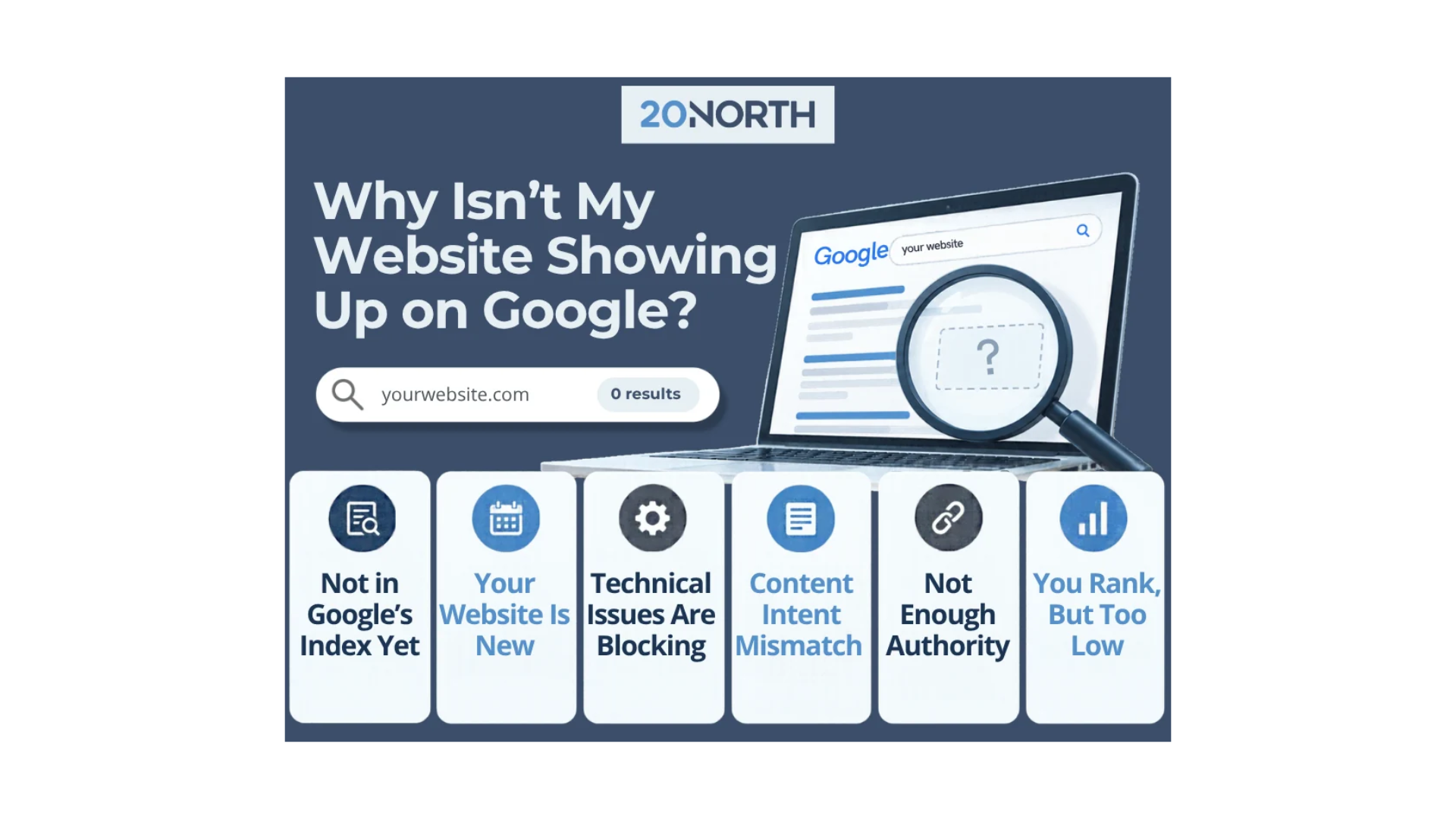
The Short Answer: A website usually does not show up on Google because the page is not in the Google index yet, a technical issue like a noindex tag is blocking it, the content does not match what people are searching for, or the page ranks on page three instead of page one. The fix starts with finding out which of these problems is happening on your site.
Most web pages never get seen. In a 2023 study of around 14 billion pages, Ahrefs found that about 96% get zero organic traffic from Google, which makes visibility the exception rather than the default. When a site is missing from the search results, business owners get the best outcome by working through the likely causes in order, starting with if a search engine can find and index the page at all.
Is Your Website in Google’s Index?
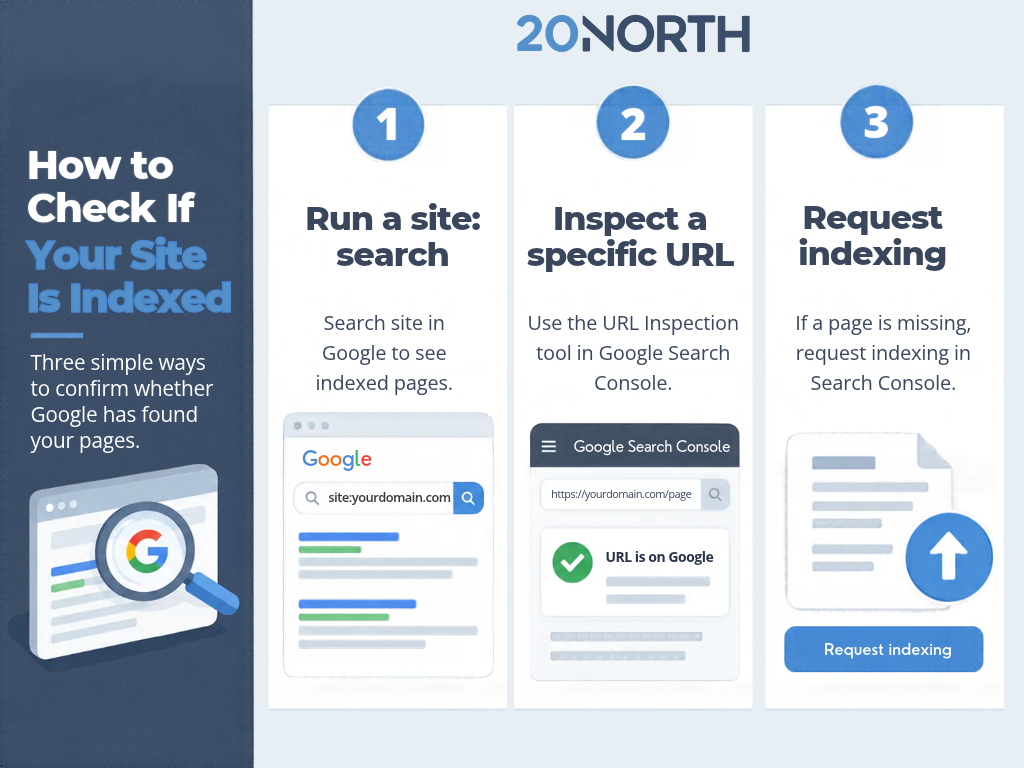
Before a page can rank, it has to be in the Google index. If it was never indexed, it cannot appear in any Google search result.
There are two quick ways to check. Type site:yourdomain.com into Google search to see which of your web pages are indexed. For a specific page, open your Google Search Console account and run the URL through the URL Inspection tool, which tells you if the URL is on Google and why.
If the page is not indexed, request indexing in Search Console and submit an XML sitemap. If Search Console shows the page as crawled but not indexed, that points to a content or quality problem rather than a discovery one. If it is indexed but still not visible, you have a ranking challenge rather than an indexing problem.
Your Site Is Too New to Rank Yet
A new site needs time. Google has to discover, crawl, and index your web pages before any of them can surface, and that process can take days to a few weeks for a new website.
You can speed up discovery. Submit a sitemap through Search Console, add internal links from pages Google already knows about, and earn a direct link or two from other reputable sites to help crawlers find the new content faster. After that, patience matters, because rankings for a new domain name tend to build gradually.
Technical Issues Are Blocking Google
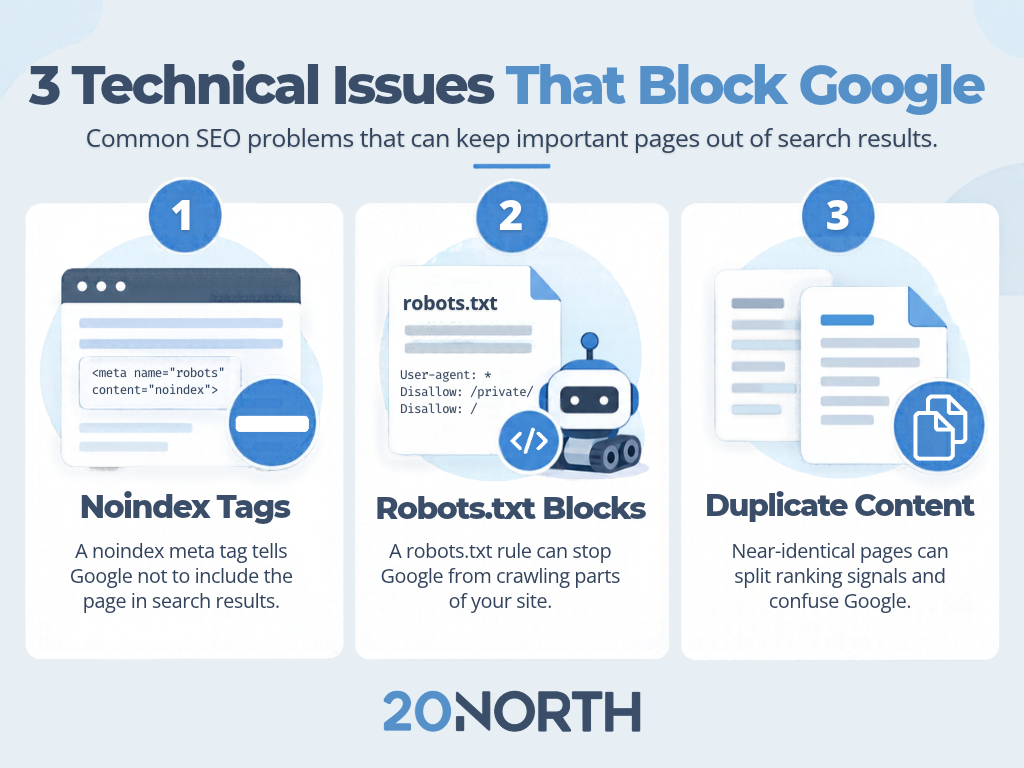
When a page is missing and it is not brand new, a technical issue is often the cause. A few potential issues keep pages out of the search results even when the content is strong.
Noindex Tags and Meta Tags
A noindex tag tells search engines to leave a page out of the index. This meta tag is common on staging sites and sometimes gets left in place after launch. Check the page source or the URL Inspection tool, then remove the tag from any important page you want indexed.
Robots.txt Blocks
Your robots.txt file can stop a crawler from reaching a page in the first place. If the file disallows a section of the site, those web pages will not be crawled or indexed. Review the file and open up anything that should be visible to a search engine.
Duplicate Content
Duplicate content splits ranking signals between near-identical pages, and Google may index a version you did not intend. Point to the preferred page with a canonical tag, rewrite pages that repeat the same content, and resolve any keyword cannibalization between them.
Your Content Does Not Match Search Intent
A page can be indexed and still stay buried if it does not answer the query. Search intent is what the person actually wants when they type a term into a search engine, and your content has to line up with it.
Read the current search results for your target term. If they are buying guides and your page is a product list, the format is off. Build high-quality content around the question being asked, cover the topic fully, and make each important page clearly about one thing. Quality content that matches intent is what Google rewards with better search rankings.
Your Site Has Not Earned Enough Authority
Google considers how trustworthy a site is. If stronger sites cover the same topic, a thin or unknown page is unlikely to reach the first page, which is a common cause of visibility issues in competitive results.
Two kinds of links help. Internal links connect your pages and pass context, so build them between related content and point readers to the pages that matter most. External link building, including guest posts on reputable sites, signals that other people trust your content. Earned links from relevant, reputable sites carry far more weight than a pile of low-quality ones.
You Rank, but Too Low
Sometimes the page is indexed and ranking, just not on page one. Since few searchers go past the first page, a result sitting on page three can feel invisible. Track your positions in Search Console, Google Analytics, and other SEO tools to see where each page actually lands, then improve the pages sitting just outside the first page.
Local businesses have a second surface to watch. A Google Business Profile feeds the local results and Google Maps, and an incomplete or unverified profile can keep you out of them. Claim the profile, fill in every field, and keep your hours and categories current.
Manual Actions and Penalties
In rarer cases, a penalty is to blame. A manual action happens when a human reviewer at Google flags your site for breaking guidelines, and it appears in Search Console. An algorithmic penalty is different. It is a drop tied to a ranking update, and it does not show up as a notice.
If you see a manual action, fix the issue it names and submit a reconsideration request. For an algorithmic drop, audit the content and links involved and bring the site back in line with Google’s guidelines.
Getting Your Website Found on Google With 20North
A missing website almost always traces back to one of a few causes. The page is not indexed, a technical issue is blocking it, the content misses search intent, the site lacks authority, or it ranks too low to be seen. Work through them in order and most visibility issues become fixable.
20North is a full-service digital marketing agency in Atlanta that helps businesses get found in search. Our SEO and AI SEO teams handle the technical fixes, content, and SEO optimization that move pages up the search results, and our web development team keeps your site fast and easy to crawl. If your website is not showing up on Google, contact 20North for a free SEO audit, and we can create a plan to fix it.